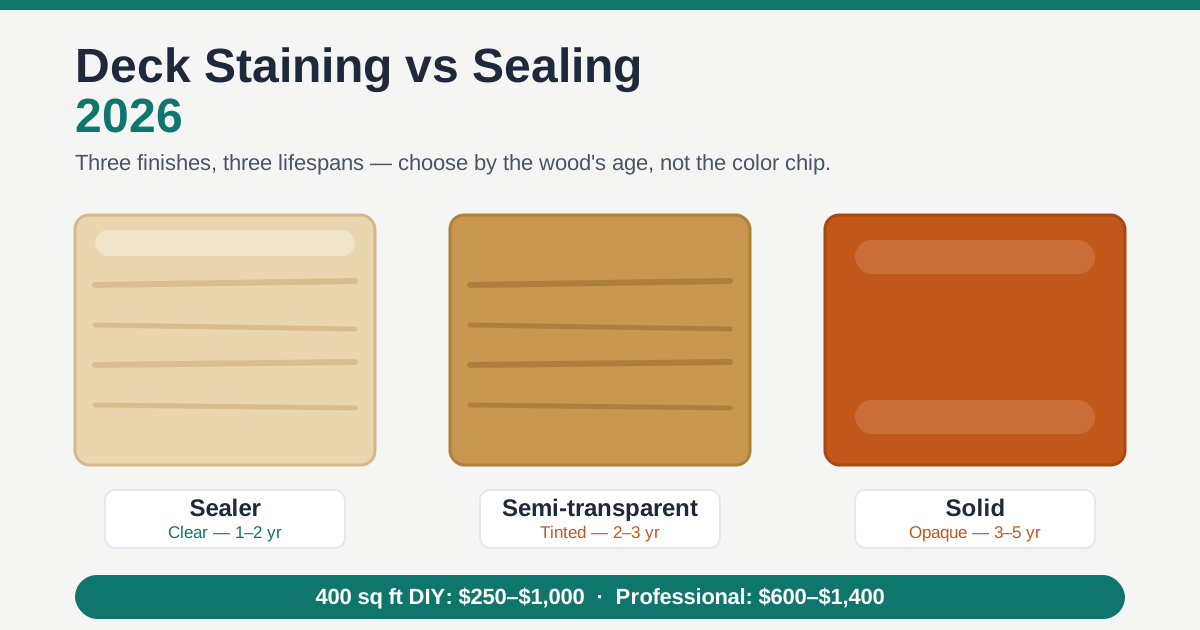
— If you’ve been comparing deck staining vs sealing hoping for one right answer, stop. They’re different jobs — and in 15 years of refinishing decks, what kills most decks isn’t lack of stain. It’s wood sealed too late, after moisture moved in. The second-biggest mistake: staining new wood so dark you hide the grain forever.
You only need to know three products: a clear sealer, a stain (transparent, semi-transparent, or solid), and combos that do both. Below: 2026 costs, lifespans, and our six-step process for a 400 sq ft deck. If maintenance itself is the problem, our composite decking vs wood guide covers the skip-it option.
Deck Staining vs Sealing: The 30-Second Difference
A sealer protects; a stain colors. Most cans labeled “deck stain” do a bit of both — here’s the split we buy and apply:
| Product | Purpose | Appearance | Lifespan | Cost / sq ft | Use it when |
|---|---|---|---|---|---|
| Sealer | Clear waterproofing | Natural wood look | 1–2 yrs | $0.40–1.50 | New cedar or redwood you want to show off |
| Transparent stain | Light tint + UV protection | Grain visible | 1–2 yrs | $0.50–1.50 | Young deck needing a refresh |
| Semi-transparent stain | Color + water protection | Tinted; grain shows | 2–3 yrs | $0.60–2.00 | The sweet spot for most decks |
| Solid stain | Opaque, paint-like film | Hides grain | 3–5 yrs | $0.70–2.50 | Old boards with stains or mixed wood |
Behr’s lineup spans the same transparent-to-solid range, so if you’re weighing a deck sealer vs stain, buy on wood age and condition, not the color chip.
Staining vs Sealing a Deck: 2026 Cost Breakdown
The honest deck staining vs sealing math for a 400 sq ft deck in 2026: DIY with two coats runs $250–$600 for sealer or $350–$900 for stain, including cleaner, brush, and tape. Low end is economy gallons; high end is premium oil-based at $1.50–$3 per sq ft.
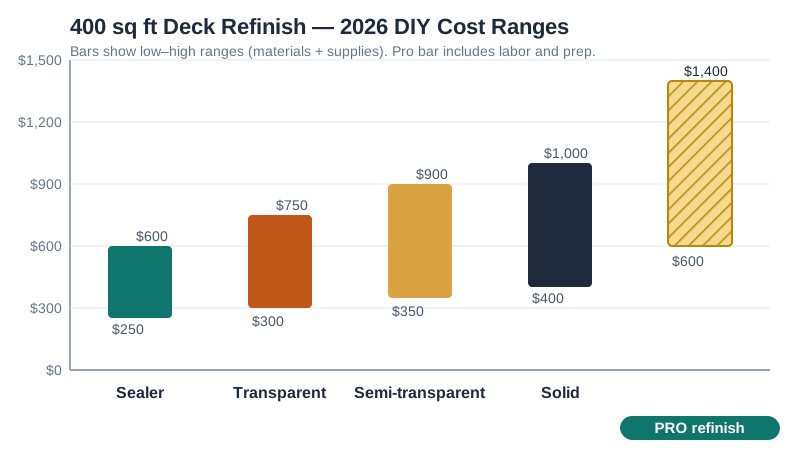
Hiring it out runs $1.50–$3.50 per sq ft including prep — $600–$1,400 for 400 sq ft. A legitimate quote covers:
- Pressure washing and deck cleaning
- Sanding and mildew removal
- Two full coats, back-rolled
- Cleanup and disposal
Prep is 60–70% of the job — why Sherwin-Williams groups deck stains under exterior wood prep. If the real goal is zero future deck maintenance cost, compare best composite decking brands before buying another gallon.
What We Learned from 50 Deck Refinishes
Half a refinish day fixes the last product — the deck staining vs sealing lesson we keep re-learning:
- Staining too dark is the regret we hear most. Solid stain on fresh cedar hides grain that took 30 years to grow, and it wears in patches you must strip. Solid is for tired boards, never new ones.
- Sealer on a slick surface fails. We’ve peeled film off old oil, gloss, and prior solid stain. Sealer needs bare, weathered wood to bite — else it peels within a year.
- Oil beat water 2-to-1 in our same-deck test. Two years in, the oil side still beaded water; the water side wore through in traffic lanes.
- Every prep horror story is about moisture. Mildew under old stain, fuzz from aggressive power washing, stain over damp boards — all preventable, all visible in year one.
Transparent vs Semi-Transparent vs Solid Stain: Which One?
Transparent stain — 1–2 years, $0.50–$1.50 per sq ft
The most natural look, the shortest life. On brand-new cedar or redwood it’s a smart first coat — UV protection with the color intact. On older sun-baked wood it won’t cover gray.
Semi-transparent stain — 2–3 years, $0.60–$2.00 per sq ft
The best deck stain for most owners — our pick for older pressure-treated pine: enough pigment to even out gray, enough penetration to last. Value pick at $350–$900 DIY for 400 sq ft — Cabot’s Australian Timber Oil has been a coastal favorite for decades.
Solid stain — 3–5 years, $0.70–$2.50 per sq ft
Paint-like durability and paint-like problems. Hides stains and mixed woods for 3–5 years, but covers grain, chips on impact, and is the hardest to remove. Use it only on decks past showing off.
“Stain is for looks; protection is a sealer’s job. Pick the finish for the wood’s age, not for the color card.” — Mike Hartwell, General Contractor
How Often Should You Stain or Seal a Deck?
The short answer to how often to stain a deck: every 1–5 years depending on product. Our schedule:
| Product | Recoat interval | Signal it’s time |
|---|---|---|
| Sealer (clear) | Every 1–2 years | Water soaks in seconds |
| Transparent stain | Every 1–2 years | Color fades, wood grays |
| Semi-transparent | Every 2–3 years | Traffic lanes wear thin |
| Solid stain | Every 3–5 years | Film cracks or peels |
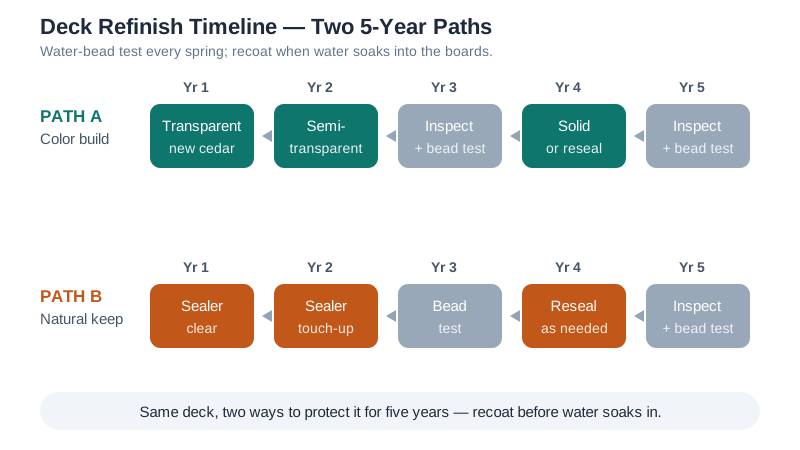
Use the water-bead test first: splash water on the boards — beads mean the film works; soak-in within seconds means recoat now. Shaded decks hold finishes a season or two longer; our patio cover cost guide covers that math. Moisture is wood’s biggest enemy — APA — The Engineered Wood Association’s guidance starts there.
How to Stain a Deck: Steps We Use
Our crew’s sequence — six steps, four to five days counting dry time:
- Clean. Spray deck cleaner, scrub, power wash ($0.10–$0.40/sq ft DIY), dry 48 hours. Stain on damp wood is the #1 cause of patchy color.
- Brighten. Neutralize cleaner, kill mildew, sand fuzz and old film.
- Check moisture. A $30 moisture meter — below 15% or you’re staining water.
- Apply thin. One thin coat, brushed or back-rolled into the grain — thick coats crack and peel.
- Second coat after 2–4 hours for water-based, overnight for oil.
- Stay off 48 hours, then water-bead test.
What DIYers get wrong: one heavy coat instead of two thin, staining in direct sun, spraying without back-rolling — shiny laps that scream “handyman special.”
Regional Pricing: Canada & New Zealand
Translate 2026 USD with rough multipliers: Canada ≈ ×1.35, New Zealand ≈ ×1.65. A 400 sq ft DIY sealer job runs roughly $340–$810 CAD; a pro refinish $810–$1,890 CAD. In New Zealand: $410–$990 NZD DIY, $990–$2,310 NZD pro. Kiwi decks lean on macrocarpa and treated pine, and oil-based maintenance is practically a rite of spring.
Frequently Asked Questions
Is it better to stain or seal a deck?
Neither — they do different jobs. New premium deck: sealer or transparent stain preserves the look. Older deck: semi-transparent or solid adds color and protection. The deck staining vs sealing debate stops mattering once you pick for the wood’s age.
Do I need to seal a deck before staining?
No. Deck stains already contain water repellents — that’s what “combo” means. Sealing first blocks penetration, so color sits on a film and chips. Clean, brighten, stain.
How often should you stain a deck?
Transparent 1–2 years, semi-transparent 2–3, solid 3–5. Shorter in full sun or salt air, longer under cover.
What lasts longer — stain or sealer?
Solid stain: 3–5 years versus 1–2 for clear sealer. But “longer” isn’t “better” — penetrating oils protect more per coat.
Can you stain over sealed wood?
Only if the sealer has worn to bare, weathered wood. Sprinkle water: beads mean too early; soak-in means scuff-sand, clean, and recoat.
Is oil-based or water-based deck stain better?
Oil penetrates deeper and lasts roughly twice as long per coat — our pick for sun-soaked CA/AZ decks with UV blockers. Water dries fast, low odor; choose mold-resistant formulas in the damp PNW and Northeast. Behr, Olympic, Thompson’s WaterSeal, and Flood sell both — chemistry matters more than brand.
Sources
- Behr — deck stains and wood finishes: https://www.behr.com
- Sherwin-Williams — deck stains and sealers: https://www.sherwin-williams.com
- Cabot Stain — exterior deck stain products: https://www.cabotstain.com
- APA — The Engineered Wood Association — wood and moisture guidance: https://www.apawood.org
