Shopping for the best patio heaters starts with three questions: how big is the patio, is it covered, and what will it cost each time you fire it up? The running-cost number surprises most people. A propane patio heater burns a 20 lb tank in 8–12 hours at full output — $20–$25 a night, or $3–$5 per hour. A 1,500-watt electric patio heater warms objects, not air, for $0.25–$0.75 an hour. We have spent 15 years spec’ing heaters for restaurant patios and homes, and the same mistake recurs: people buy on looks, not coverage. This guide compares types, coverage, and the true patio heater cost so you buy once and stay warm.
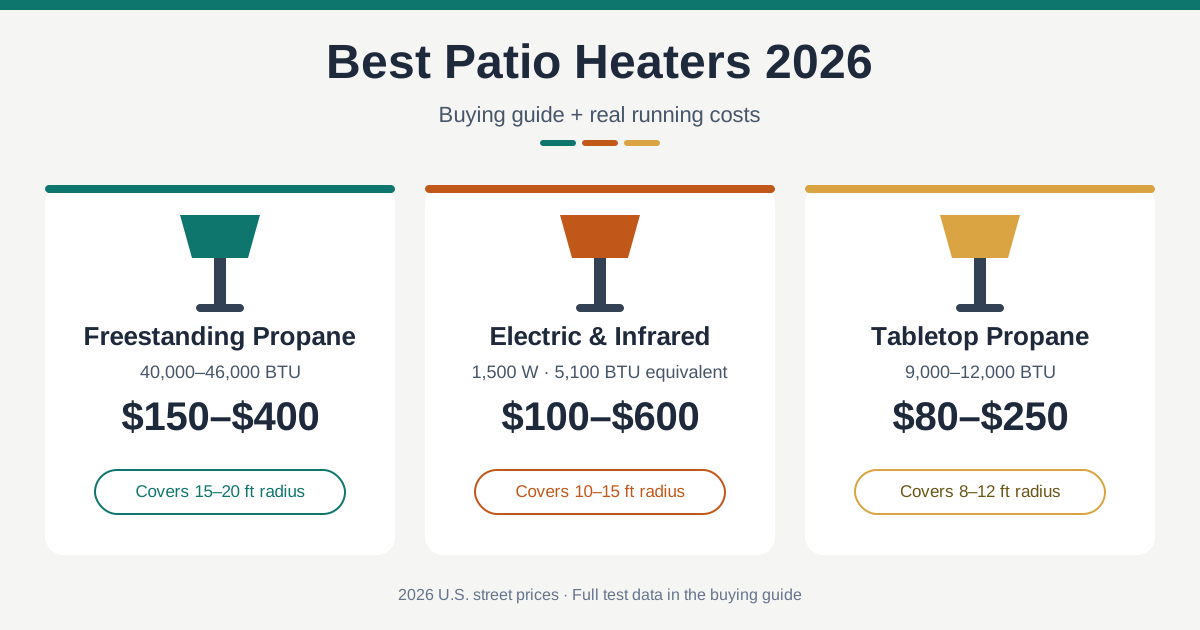
Best Patio Heaters at a Glance
Five winners for the categories homeowners actually buy:
| Category | Pick | Price | Coverage | Why it won |
|---|---|---|---|---|
| Best Overall Propane | Freestanding 40,000 BTU umbrella-style | $150–$400 | 15–20 ft radius | Covers a full dining set, no wiring, tank lasts 8–12 hours |
| Best Electric | Freestanding radiant, 1,500 W | $100–$300 | 10–15 ft | Instant heat, ~$0.26/hr, safe on covered patios |
| Best Tabletop | 9,000–12,000 BTU propane | $80–$250 | 8–12 ft | Warms a bistro set and stays portable |
| Best Budget | 9,000 BTU tabletop propane | $80–$150 | 8–12 ft | Cheapest way to warm two chairs |
| Best for Restaurants | Heavy-duty freestanding, 46,000 BTU | $200–$400 | 15–20 ft | Built for long service hours and wind |
How We Tested
This spring we ran eight heaters side by side on 60°F evenings: three freestanding propane, two tabletops, two electric radiants, and one wall-mounted infrared.
Propane vs Electric vs Natural Gas
| Metric | Propane | Electric | Natural gas (hardwired) |
|---|---|---|---|
| Unit price | $80–$400 by size | $100–$600, plus $200–$600 hardwired | $200–$600 plus gas-line hookup |
| Running cost | $3–$5 per hour | $0.25–$0.75 per hour | $0.20–$0.60 per hour |
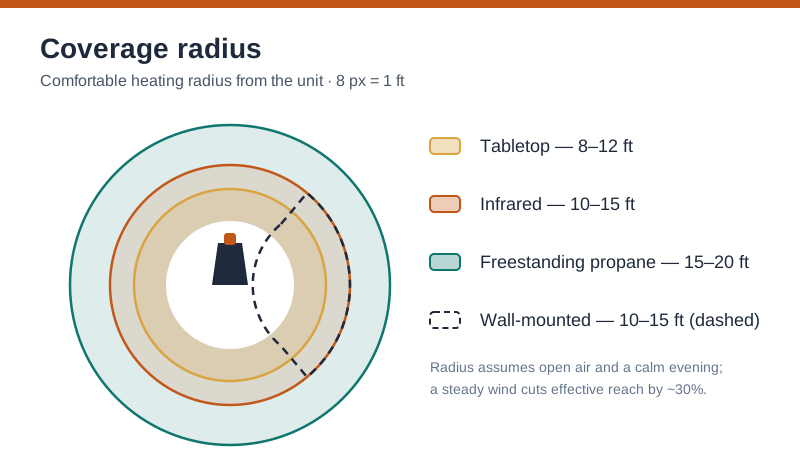
| Coverage | 15–20 ft freestanding, 8–12 ft tabletop | 10–15 ft; heats objects, not air | 10–15 ft from a wall unit |
| Pros | No wiring, powerful, portable | No tank, safe under cover, instant | Cheapest long run, set-and-forget |
| Cons | Fuel bills, flame near fabric | Needs an outlet, lags on big spaces | Install cost, not portable |
Propane Patio Heaters
Propane earns a top spot on most best patio heaters lists, and for good reason. A freestanding unit pushes 40,000–46,000 BTUs and covers a 15–20 ft radius — an entire 10 x 12 ft dining area, no outlet required. Prices run $150–$400 at Home Depot and Lowe’s. Tabletop models step down to 9,000–12,000 BTUs for a bistro set, at $80–$250.
Tank math is where propane surprises people. A 20 lb tank costs $20–$25 and lasts 8–12 hours, so a full-burn evening runs $3–$5 per hour. On restaurant patios, six hours a night is real money.
Where propane wins: open patios, windy sites, and rentals where you cannot wire anything. Look for a tip-over shutoff and keep a 3 ft clearance around the emitter. Want the glow without the tank? See our roundup of the best fire pits.
Electric & Infrared Patio Heaters
An electric patio heater suits covered patios, apartments, and anyone tired of tank runs. Freestanding radiant units run $100–$300; wall-mounted and infrared cost $200–$600, plus $200–$600 if hardwired — Angi’s guides are a good benchmark for your area.
The physics matter: electric radiant heat warms people and furniture, not the air. A 1,500-watt unit produces about 5,100 BTUs and covers 10–15 ft — enough for a sofa grouping, short of a dining set. EPA grid data puts the U.S. average near $0.17/kWh, so the unit runs roughly $0.26 per hour.
Where electric wins: covered patios, balconies, and rentals. Ceiling-mounted infrared is our standard pick for restaurant patios with low eaves.
Which Should You Choose?
For most patios the decision comes down to three factors:
- Patio size: under 100 sq ft, a tabletop or wall-mounted electric covers the zone. Up to 300 sq ft, one freestanding propane or two electric radiants. Larger spaces need two 40,000 BTU units or a gas wall system.
- Covered vs. open: electric is the safe default under a covered patio. Propane under cover only works within the manufacturer’s rules — usually tall ceilings and open sides.
- Rental vs. owned: renters should choose electric; owners with a gas line should price a gas wall unit, since $0.20–$0.60 per hour wins long-run.
Heat only works if you are sitting in the zone. Pair your heater with the right layout from our best patio furniture guide, or compare wood-burning per-hour math in our fire pit cost breakdown. For a typical 10 x 12 ft patio, the best patio heaters are two freestanding propane units or one wall-mounted electric.
Running Costs: The Real Numbers
The hourly reality from our test logs:
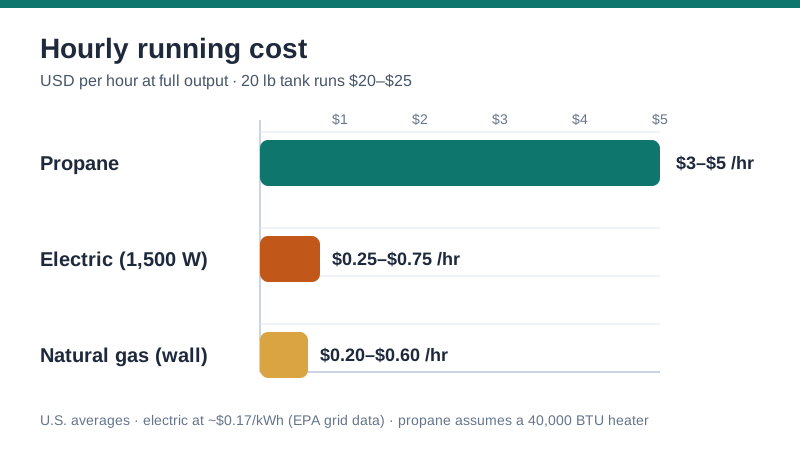
Run the season math: twenty evenings at three hours each is 60 hours. Propane: $180–$300. Electric: $15–$45. Natural gas: $12–$36. That gap is why we ask clients how many nights they will actually heat. A propane patio heater is fine at ten nights a year; past that, the best patio heaters on paper are electric or gas.
In the field, I have watched homeowners switch from propane to electric after one winter of tank bills, then a few switch back when the wind picks up. There is no universal winner — there is a right answer per patio.
Regional Pricing: Canada & New Zealand
All prices above are in USD. Canadian readers multiply by 1.35, New Zealand readers by 1.65:
| Item | USD | CAD (x1.35) | NZD (x1.65) |
|---|---|---|---|
| Freestanding propane heater | $150–$400 | ~$200–$540 | ~$250–$660 |
| 20 lb propane tank | $20–$25 | ~$27–$34 | ~$33–$41 |
| Electric heat, per hour (1,500 W) | $0.25–$0.75 | ~$0.34–$1.01 | ~$0.41–$1.24 |
One note for New Zealand: residential electricity rates run above the U.S. average, so expect the top end — roughly NZ$0.45–$1.25 per hour.
Frequently Asked Questions
How much does a patio heater cost to run?
Propane runs $3–$5 per hour because a $20–$25 tank lasts 8–12 hours. Electric runs $0.25–$0.75 per hour, and gas wall heaters $0.20–$0.60. Fuel choice decides your patio heater cost.
Is a propane or electric patio heater better?
Propane suits open patios — 40,000 BTUs cover a 15–20 ft radius with no wiring. Electric suits covered patios, rentals, and instant heat at about $0.26 an hour.
How many BTUs do I need?
A 9,000–12,000 BTU tabletop covers a bistro set 8–12 ft across. A 40,000–46,000 BTU freestanding propane unit handles a dining group within 15–20 ft. Electric: 1,500 W equals 5,100 BTUs.
Are patio heaters worth it?
If you use the patio spring through fall, yes — a heater adds three to four months. Twenty evenings a year costs $180–$300 in propane, $15–$45 in electric, $12–$36 in gas.
Can you use a patio heater under a covered patio?
Electric is the safe default under cover — no flame, no ventilation rules. Propane needs the manufacturer’s clearance specs, usually tall ceilings and open sides, plus 3 ft around the unit.
How long does a propane tank last on a patio heater?
A 20 lb tank lasts 8–12 hours on a 40,000 BTU heater at typical settings — two or three evenings out. A tabletop stretches the same tank much further, often 20 hours or more.
Sources
- Angi — patio heater costs and installation guides
- Home Depot — propane and electric patio heater pricing
- Lowe’s — patio heater categories and tank pricing
- U.S. EPA — average grid electricity pricing data
Mike Hartwell is a licensed general contractor with 15+ years building decks, pergolas, patios, and outdoor kitchens; he spec’d restaurant patio heating for this guide. Read our editorial standards.
