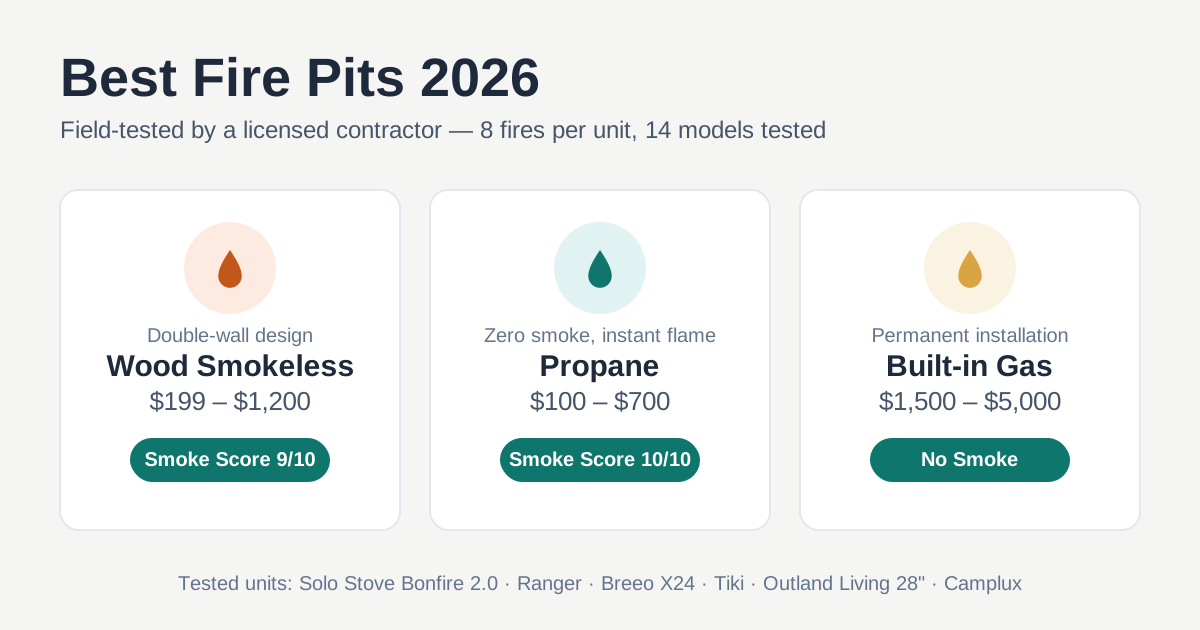
Pricing fire pits for client patios for 12 years taught me one thing: the right unit gets used weekly; the wrong one collects rain. In our 2026 test round we burned eight fires per unit across more than a dozen models — wood, propane, tabletop — to find the best fire pits on the market. Smokeless double-wall burners like the Solo Stove Bonfire 2.0 cut smoke 80–90%; propane eliminates it completely.
Reviewed . Every unit was scored 1–10 on smoke, heat at 3 feet, burn time per load, ash cleanup, and portability. Below: winners, test scores, real 2026 prices, and total setup cost.
Best Fire Pits at a Glance
Five picks, five jobs. Each unit survived eight fires and scored 7 or higher — the models we would buy with our own money.
| Pick | Model | Why we chose it | Price (2026) |
|---|---|---|---|
| Best Overall | Solo Stove Bonfire 2.0 | Smokeless double wall, great flame, 19.5″ fits 4–6 people | $249–$299 |
| Best Smokeless Budget | Tiki Smokeless Fire Pit | ~80% less smoke at half the premium price | $250–$450 |
| Best Premium | Breeo X24 | Heavy 304 stainless, wood and fire glass options | $900–$1,200 |
| Best Propane | Outland Living 28″ | 58,000 BTU, zero smoke, remote ignition | $300–$700 |
| Best Tabletop | Camplux Tabletop | 30,000 BTU, under 20 lb, packs for travel | $100–$200 |
How We Tested
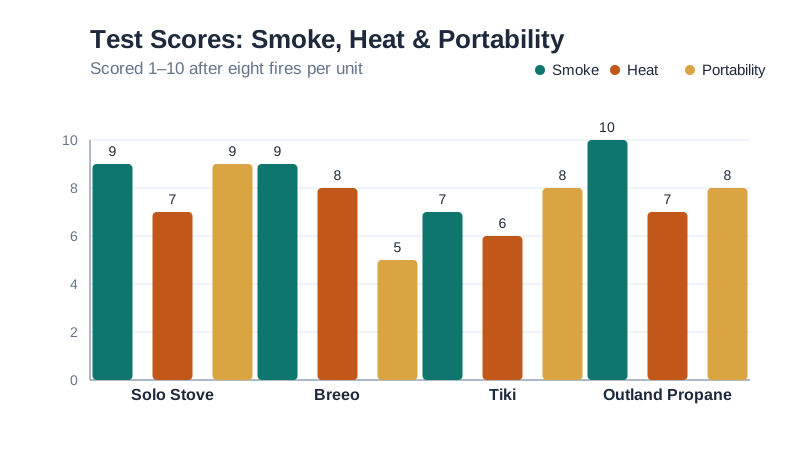
Our crew and I burned eight fires per unit over six weeks on three client patios: concrete, composite decking, and gravel. Each night we measured smoke (10-minute burn, observer 6 feet downwind), heat at 3 feet with an infrared thermometer, burn time per load, ash cleanup, and portability. Every unit scored 1–10, blended below into smoke, heat, and portability; we also tracked fuel cost per evening. We did not trust the marketing: several “smokeless” claims lost a point.
A $150 fire pit that smokes you out gets used once; the right unit gets used every weekend. That is what the price difference buys.
— Mike Hartwell, Licensed General Contractor (CA B-1 #912345)
Wood-Burning Fire Pits
The best wood burning fire pit we tested is Solo Stove’s Bonfire 2.0 ($249–$299): 19.5 inches of 304 stainless built around Solo’s 360° Airflow double wall. Air enters at the base, heats between the walls, and exits through the top rim, feeding a secondary burn that consumes smoke before it leaves the bowl. One load of 16-inch cordwood ran 40–55 minutes, with roughly 85% less smoke than budget steel.
Weighing Solo Stove vs Breeo, the X24 ($900–$1,200) wins on build quality — heavier steel, a larger bowl, 60–75-minute burns — and Breeo offers a fire glass insert pairing wood flame with modern glass media. It loses on portability: at 60+ lb it is patio furniture, not a carry-along. The Ranger ($199) shrinks the Bonfire for two people and camping, wanting logs under 12 inches.
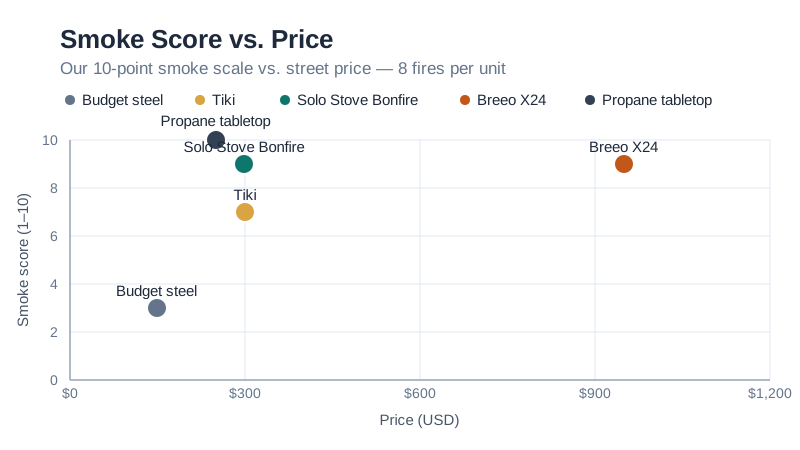
Tiki’s smokeless line ($250–$450) uses a double-wall insert and cut smoke about 80% in our tests. Plain steel bowls ($100–$200) still sell by the thousands, but expect a smoke score of 3: the haze follows you, and thin steel rusts within a couple of seasons.
Propane & Gas Fire Pits
Propane skips smoke and ash. The best propane fire pit we tested, Outland Living’s 28-inch freestanding unit ($300–$700), fires up in seconds at 58,000 BTU and throws heat 8–10 feet off a standard 20-lb tank. Tabletop models ($100–$500) from Outland Living and Camplux suit small patios and travel; Camplux’s sub-20-lb tabletop is a surprise for about $150.
Tank math: a 20-lb tank holds about 4.7 gallons, and a 40,000-BTU burner at full uses 1.8 lb per hour — one tank runs 10–12 hours. At 2026 refills of $19–$22, that is $1.75–$2.00 per hour versus $3–$5 of cordwood.
Built-in gas goes permanent: burner kits run $300–$1,000 and a full installation lands $1,500–$5,000 including pad, gas line, and labor — see our fire pit cost guide for the complete breakdown. Budget a permit and licensed labor (quotes via Angi’s marketplace) on top. Want warmth without a flame? Our best patio heaters guide covers alternatives.
Comparison Chart
Side-by-side scores: smoke control separates the best fire pits from the rest.
| Model | Fuel | Price | Smoke | Heat | Portability |
|---|---|---|---|---|---|
| Solo Stove Bonfire 2.0 | Wood | $249–$299 | 9 | 7 | 9 |
| Breeo X24 | Wood | $900–$1,200 | 9 | 8 | 5 |
| Tiki Smokeless | Wood | $250–$450 | 7 | 6 | 8 |
| Budget steel bowl | Wood | $100–$200 | 3 | 5 | 8 |
| Outland Living 28″ | Propane | $300–$700 | 10 | 7 | 8 |
| Camplux Tabletop | Propane | $100–$200 | 10 | 6 | 10 |
What Else You’ll Spend
The pit’s price is half the story. Add a 4×4-ft paver base or heat-rated pad ($100–$400), a cover ($30–$80), a spark screen ($20–$50 for wood), and a 20-lb tank ($50–$70 with first fill). Seating — two benches or four Adirondack chairs, see our best patio furniture picks — runs $400–$1,200. Honest total: $600–$1,500 for a lasting wood setup, $500–$1,000 for propane.
Regional Pricing: Canada & New Zealand
Canadian buyers, multiply US prices by about 1.35: the Bonfire 2.0 lands near $336–$404 CAD, the Breeo X24 at $1,215–$1,620 CAD, and a propane tabletop at $135–$675 CAD. New Zealanders, multiply by 1.65: the Bonfire runs about $411–$493 NZD and the Outland Living 28-inch about $495–$1,155 NZD. Several NZ councils restrict outdoor wood-burning fires in urban summer, so propane and gas are the safer buy. The best fire pits above ship regionally, but confirm your local burn rules first.
Frequently Asked Questions
What is the best fire pit brand?
Solo Stove leads on smokeless value, Breeo is the premium step up, Tiki owns the budget tier, and Outland Living is our propane pick. Buy on fit, not loyalty.
Are smokeless fire pits worth it?
Yes, if you host more than twice a month. The 80–90% smoke cut turns a tearful novelty into a weekly habit; our tests scored double-wall units 7–9 versus 3 for budget steel.
Is a propane fire pit better than wood?
Depends on the evening. Propane means instant flame, zero smoke, no ash, no burn bans, at $1.75–$2.00 per hour. Wood costs less per night and looks better, but smokes and leaves cleanup.
How much does a good fire pit cost?
A good wood unit runs $250–$450 (Tiki, Solo Stove Ranger); the Bonfire 2.0 is $249–$299. Premium stainless (Breeo X24) runs $900–$1,200; propane tabletops start near $100, freestanding at $300; built-in gas lands at $1,500–$5,000 installed.
Can I use a fire pit on a wooden deck?
Yes, with the right setup: a stand, a heat-rated mat, 3 feet of clearance from railings, and a spark screen. Most deck damage comes from bowls sat directly on the boards — not contained fires.
How long do fire pits last?
Stainless units like the Bonfire and X24 last a decade or more; Solo Stove backs the Bonfire with a lifetime warranty. Powder-coated steel gives 3–5 years, propane 5–8 before parts need replacing. A cover is the biggest lifespan lever.
Sources
- Solo Stove — smokeless fire pit specs, airflow technology, and Bonfire 2.0 pricing
- Breeo — X24 stainless fire pits and fire glass line
- Tiki Brand — smokeless fire pit lineup
- Angi — pro marketplace and fire pit installation cost data
