A pergola kit is 50% product and 50% installation — we learned that one $40 hardware-store run at a time. After assembling more than 15 kits (wood, vinyl, and aluminum) for clients, we can tell you the best pergola kits share one trait: they build the way they’re sold. Square parts, labeled hardware, directions a homeowner can follow. The other half is site work no box includes — a level base, anchoring, two to three days of two-person labor. Get both halves right and a $2,500 cedar kit outlasts a $6,000 one that skipped the footings. Here’s what ships, what breaks, and what’s worth your weekend.
Best Pergola Kits at a Glance
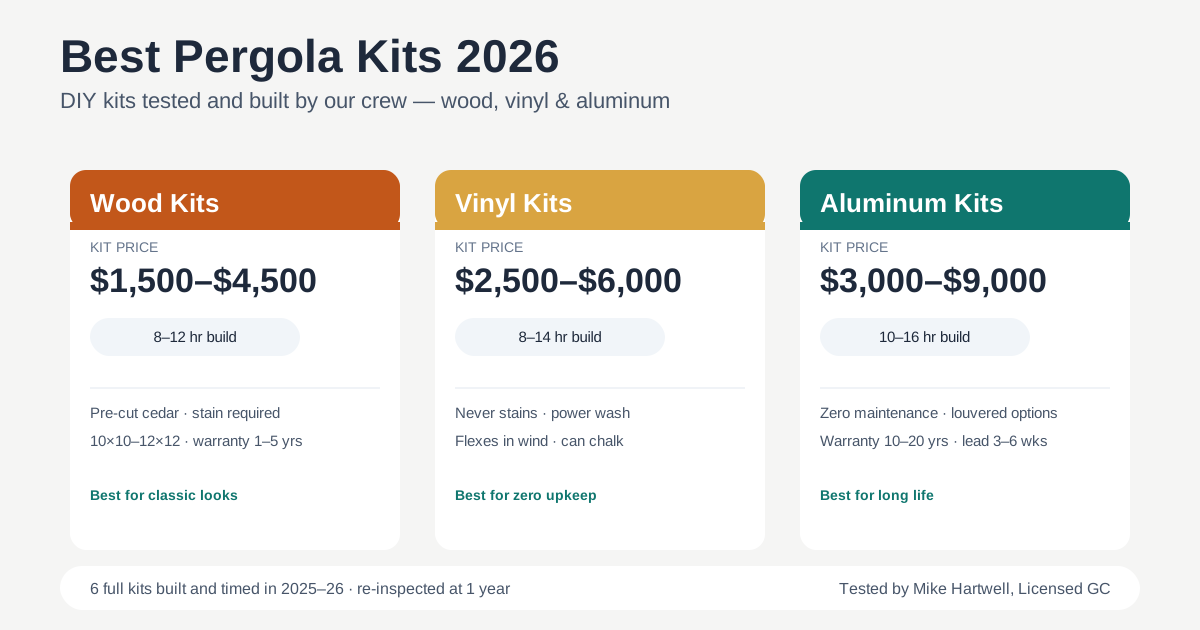
These are the best pergola kits for most yards — 2026 U.S. prices, 10×10 to 12×12 footprints, before footings, anchors, stain, and permit fees.
| Winner | Kit | Price | Why it won |
|---|---|---|---|
| Best Wood | Yardistry cedar (Home Depot) | $1,500–$4,500 | Pre-cut cedar, fastest wood build we timed |
| Best Value | Costco cedar kit | $1,800–$3,500 | Most structure per dollar |
| Best Aluminum | Pergola Depot aluminum | $3,000–$9,000 | Zero maintenance, real wind ratings |
| Best Louvered | StruXure dealer kit | $10,000+ | Adjustable shade with built-in drainage |
| Best for Small Spaces | Toja Grid modular | $1,000–$2,500 | Sized to your slab; a single-afternoon build |
How We Tested
These pergola kit reviews score four things: instruction quality, parts quality (pre-drilled holes, hardware gauge, fastener count), stability before anchoring, and a one-year follow-up for sag, rust, and rot at the posts.
Three of six boxes shipped missing hardware, and one manual omitted anchoring entirely — instruction quality is the single biggest difference between a $1,500 kit and a $4,500 kit.
Most pergola failures we repair start at the base, not the roof. If the posts aren’t anchored to something that can’t move, the best kit money can buy wobbles within a year.
Wood Pergola Kits
Wood is still the most popular DIY pergola kit category, led by Home Depot’s Yardistry line and Costco’s cedar kits. For 10×10 to 12×12 footprints, plan on $1,500–$4,500. Pre-cut cedar beats pine on looks and rot resistance; pressure-treated pine is the budget move but splits at bolt holes more often.
Pre-cut kits ship with everything mitered and drilled — 8–12 hours for two people. Bolt-together kits cost less but need a circular saw and more patience. Every wood kit needs two coats of oil-based stain within 60 days of assembly and again every two to three years; otherwise the cedar grays and the end grain drinks water. Rot concentrates at the post bases — the number-one failure we see on client jobs.
If you need weather protection rather than shade, compare our patio cover cost breakdown first — covers solve rain, pergolas solve shade.
Aluminum Pergola Kits
The best aluminum pergola kits are the closest thing to zero maintenance: powder-coated frames that never need stain, rafters that don’t warp, and 10–20 year warranties versus 1–5 years on wood. Expect $3,000–$9,000 for a 10×12–12×14 kit, and check the wind rating — thin extrusions flex in gusts. Louvered kits add adjustable shade for $4,000–$8,000; dealer systems like StruXure run $10,000+.
Lead times run 3–6 weeks, and assembly took us 10–16 hours for two people. The powder coat survived a full year of sun and rain untouched. The trade-offs are price and presence: aluminum reads modern, not rustic.
If a crew-built structure fits your budget instead, our aluminum pergola cost guide breaks down installed pricing for the same footprints.
Vinyl & Other Options
Vinyl kits ($2,500–$6,000) win on cleanliness — they never need staining and power-wash back to white. But vinyl disappointed us: UV turns cheap resin chalky within two summers, hollow posts flex more than wood or aluminum, and heat expands rails so fasteners loosen. Our test build finished fine, but it was the only structure needing a follow-up visit for fastener torque.
Modular systems like Toja Grid take a different path: galvanized steel posts that bolt onto an existing deck or slab, with cedar beams you buy locally. Small setups run about $1,000–$2,500 and build in one afternoon. Furnish the space with the best patio furniture we’ve tested and it becomes a room.
Comparison Chart
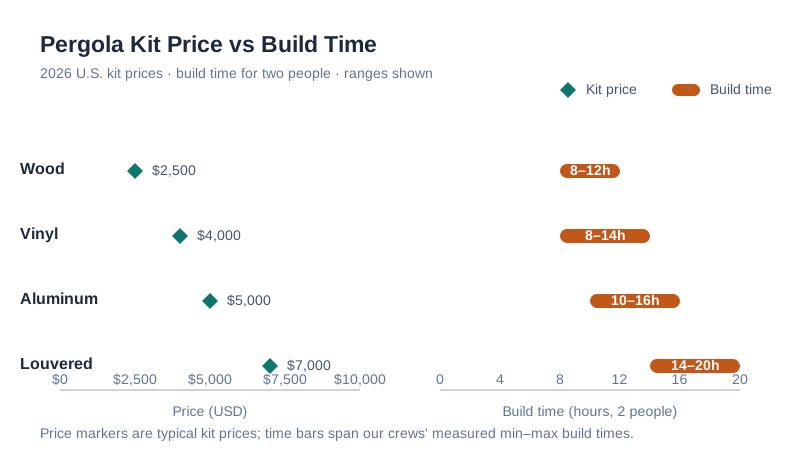
Here’s how the best pergola kits we assembled stacked up, with real build times from our crews.
| Kit | Material | Price | Build time (2 people) | Warranty | Maintenance |
|---|---|---|---|---|---|
| Yardistry 12×12 | Cedar | $2,500–$4,500 | 8–12 hrs | 1–5 yrs | Re-stain every 2–3 yrs |
| Costco cedar kit | Cedar | $1,800–$3,500 | 8–12 hrs | 1–5 yrs | Re-stain every 2–3 yrs |
| Pergola Depot | Aluminum | $3,000–$9,000 | 10–16 hrs | 10–20 yrs | Rinse occasionally |
| StruXure louvered | Aluminum | $10,000+ | 14–20 hrs | 10–20 yrs | Lube louver tracks |
| Vinyl kit | Vinyl | $2,500–$6,000 | 8–14 hrs | 5–10 yrs | Power wash |
| Toja Grid | Steel + cedar | $1,000–$2,500 | 4–8 hrs | 1–5 yrs | Minimal |
What the Kit Doesn’t Include
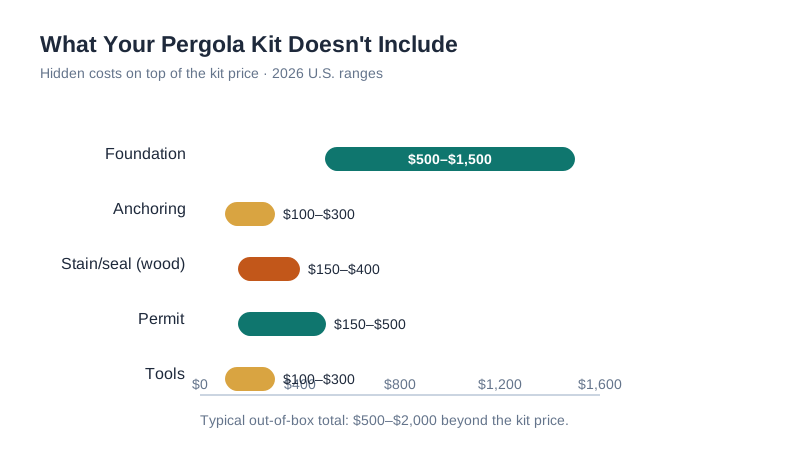
Every kit in our test shipped without foundation materials, anchor hardware, stain, and tools — and several arrived before the buyer filed the permit. Budget a hidden $500–$2,000 beyond the sticker price:
- Foundation (footings or level slab): $500–$1,500
- Anchoring (anchor bolts and post brackets): $100–$300
- Stain/sealant (wood kits): $150–$400
- Permit (required in most jurisdictions): $150–$500
- Tools (drill, bits, saw, level): $100–$300
Total assembly runs two to three days — day one for layout and footings, day two for the frame, day three for finish and anchoring.
Regional Pricing: Canada & New Zealand
Outside the U.S., kit prices convert at roughly CAD ×1.35 and NZD ×1.65, with freight on top. New Zealand buyers pay an import premium: 15–25% in shipping and 4–8 weeks of lead time, so confirm freight before ordering.
| Kit type | USD | CAD | NZD |
|---|---|---|---|
| Wood 12×12 | $2,500–$4,500 | $3,375–$6,075 | $4,125–$7,425 |
| Vinyl 12×12 | $2,500–$6,000 | $3,375–$8,100 | $4,125–$9,900 |
| Aluminum 12×12 | $3,000–$9,000 | $4,050–$12,150 | $4,950–$14,850 |
| Louvered aluminum | $4,000–$8,000 | $5,400–$10,800 | $6,600–$13,200 |
Canadian and New Zealand winters punish cheap hardware — spec stainless fasteners and confirm snow-load ratings in writing.
Frequently Asked Questions
Are pergola kits worth it?
Yes — the best pergola kits deliver a $6,000–$10,000 installed structure for a $2,000–$5,000 kit plus a weekend of labor. Skip them only if you can’t anchor to footings or your HOA blocks permits.
How much does a DIY pergola kit cost?
Wood kits run $1,500–$4,500, vinyl $2,500–$6,000, and aluminum $3,000–$9,000. Louvered kits start around $4,000; premium systems like StruXure exceed $10,000. Add $500–$2,000 for footings, anchors, stain, permit, tools.
How long does it take to assemble a pergola kit?
Plan on two to three days for two people: wood and vinyl 8–14 hours, aluminum 10–16, louvered 14–20. Footings and anchoring add a day unless the concrete is already in place.
Do you need a permit for a pergola?
Usually, yes. Most jurisdictions require permits for attached structures and freestanding pergolas over local size limits — typically 120–200 sq ft. Fees run $150–$500. Check with your building department before ordering.
What’s the best material for a pergola kit?
Aluminum, if you never want to maintain it and the budget allows $3,000–$9,000. Cedar, for classic looks with re-staining every two to three years. Vinyl flexes and chalks — last place for windy sites.
Can one person build a pergola kit?
Technically yes, but we don’t recommend it. Beams and rafters are heavy, and a second person nearly halves the build time. At minimum, rent post jacks and plan a helper for the rafter stage.
Sources
- Home Depot — Yardistry and aluminum pergola kits: https://www.homedepot.com/
- Lowe’s — pergola kits: https://www.lowes.com/
- Costco — cedar pergola kits: https://www.costco.com/
- StruXure — louvered aluminum pergola systems: https://www.struxure.com/
