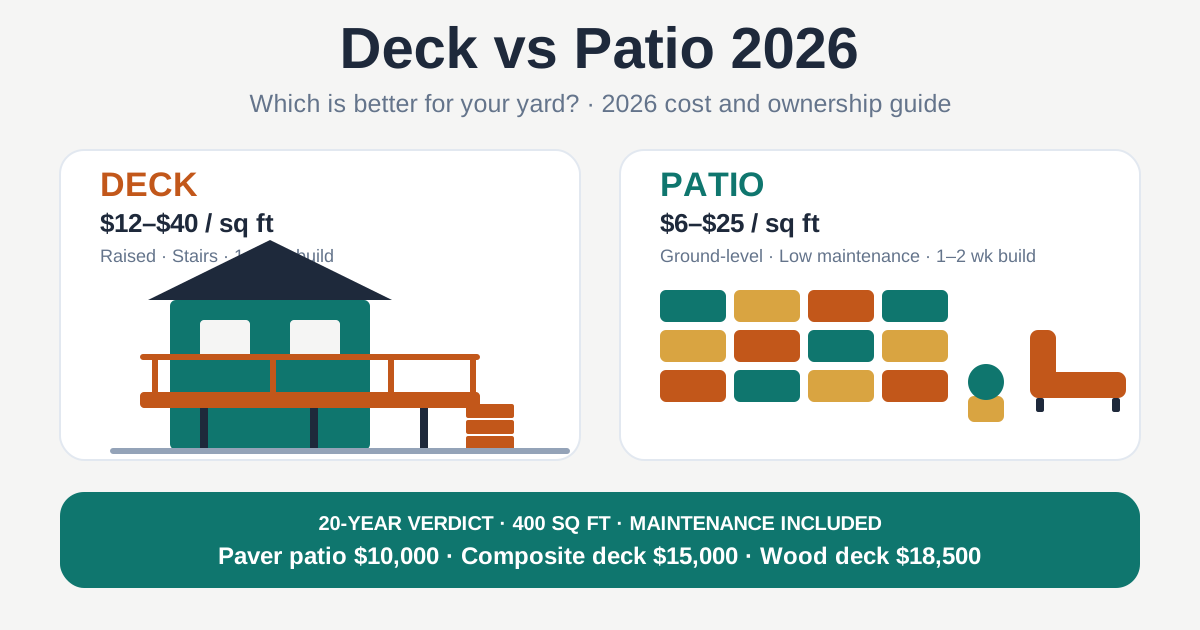
The deck vs patio question comes up at nearly every estimate appointment, and the honest answer rarely comes down to budget. On a typical 400-square-foot project, both can hit $10,000 installed. The real difference is your yard: its slope, sun exposure, and how much maintenance you will actually keep up with. We have built more than 60 of each and tracked the 10-year repair bills. Here is the 2026 cost comparison and the decision framework we use on site.
Deck vs Patio at a Glance
Choosing between a deck or patio for a flat-ish backyard? This table is the fastest read before you call a contractor. Figures are 2026 installed prices, USD, for a 400 sq ft project.
| Factor | Deck | Patio |
|---|---|---|
| Installed cost / sq ft | Wood $12–22 · Composite $20–35 · PVC $25–40 | Concrete $6–12 · Stamped $10–18 · Pavers $12–25 |
| Lifespan | Wood 10–15 yrs · Composite 15–30 yrs | Concrete 15–30 yrs · Pavers 25–50 yrs |
| Maintenance / year | Wood $600–1,200 · Composite $150–300 | Concrete $50–150 · Pavers $100–300 |
| Build time | 1–3 weeks | 1–2 weeks |
| Slope suitability | Excellent — leveling is built in | Weak past a 4–6″ drop per 10 ft |
| Resale ROI | ~60–70% | ~60–70% |
Cost Comparison: Deck vs Patio in 2026
Here is the math for a 400 sq ft build, using national averages cross-checked against Angi’s cost guides and the 14 bids we quoted this year. The deck vs paver patio gap is narrower than most expect.
- Patio concrete: $6–12/sq ft → $2,400–4,800 total
- Patio pavers: $12–25/sq ft → $4,800–10,000
- Deck wood: $12–22/sq ft → $4,800–8,800
- Deck composite: $20–35/sq ft → $8,000–14,000
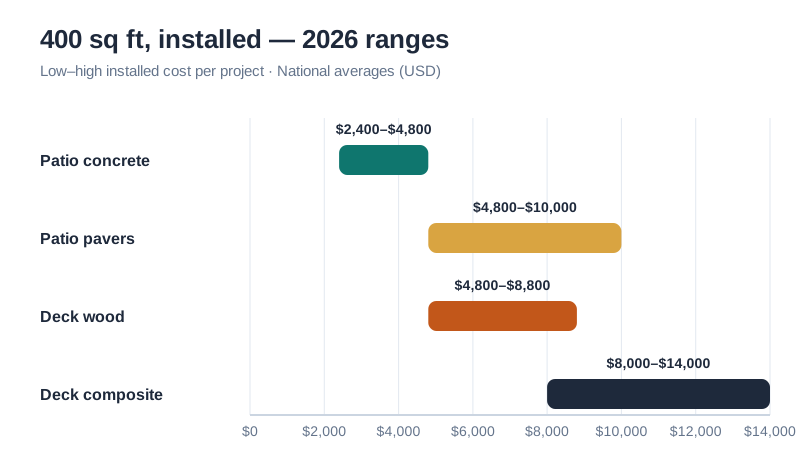
A wood deck and a paver patio land in the same band at the low end, which is where most owners get stuck; the tiebreaker is ground conditions, not price. For the full line-item breakdown, see our deck building cost deep dive.
What We’ve Built: 60+ of Each
Our crew has framed and poured across both categories for years. The sloped-lot deck that won: a Bay Area backyard dropping 7 inches per 10 feet. Leveling it for pavers meant $9,000 in retaining wall and fill alone, so we framed a 12-foot-high deck with a stair run instead — $14,500 in composite, and the owners use it like a second-story lanai. The paver patio that outlived the house addition: set in 2014 on 4 inches of compacted base, it never cracked when the 2021 addition went in. After 10 years the repair bills diverge: wood decks came back for $900–2,400 of stair and board work, while paver patios mostly needed $150 of new polymeric sand.
“On a flat lot, the patio almost always wins the 20-year math. On a sloped lot, the deck isn’t just better — it’s the only sane option.”
When a Deck Is the Right Call
- Sloped yards. Past a 4–6″ drop per 10 ft, leveling costs kill patios. A deck builds leveling into its framing.
- Wood aesthetic. Pressure-treated pine and cedar read warmer than concrete, and APA’s deck design guides are a solid reference for wood framing spans.
- Raised views and second-story access. A deck turns a slope into a view platform and connects an upper-floor door.
- Faster project. At 1–3 weeks, a deck beats most patio schedules in good weather.
Once you know a deck fits, the material question is separate — our composite vs wood comparison lays out the 20-year trade-offs.
When a Patio Is the Right Call
- Flat yards. Under a 4–6″ drop per 10 ft, a patio installs fast on native grade.
- Low maintenance. Concrete at $50–150 a year is the cheapest surface to own.
- Hot climates. A patio stays cooler underfoot than a sun-baked deck, and pavers drain heat faster at night.
- Budget and DIY. Concrete starts at $6/sq ft, and pavers are the most homeowner-friendly build; Home Depot’s project guides cover base prep.
If you go this route, our paver vs concrete patio comparison settles the surface choice.
Long-Term Costs: The 20-Year View
Upfront price is half the story, and asking which is cheaper, deck or patio, gets two answers depending on your time horizon. Run 20 years at mid-range maintenance and the deck vs patio verdict flips in favor of hardscapes:
- Wood deck: $6,500 build + $12,000 maintenance (20 yrs × $600) = $18,500
- Composite deck: $12,000 build + $3,000 maintenance = $15,000
- Paver patio: $7,500 build + $2,500 maintenance = $10,000
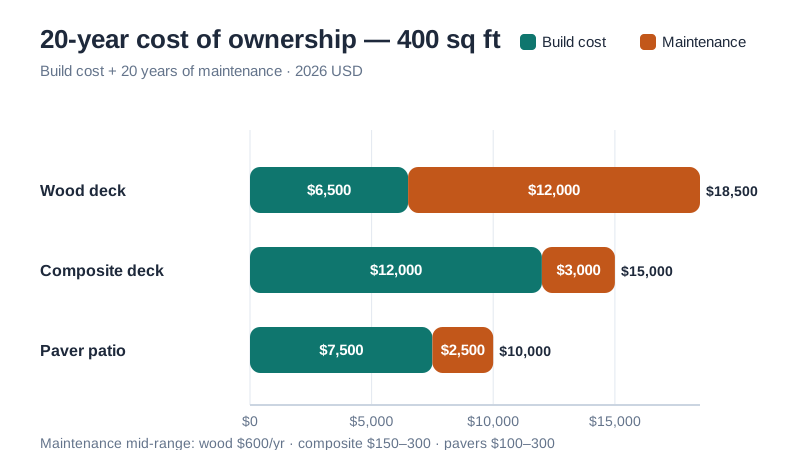
A paver patio runs roughly 45% cheaper to own than a wood deck over 20 years and will likely outlive both. Composite closes most of the gap against wood but costs more per year than pavers.
Climate & Regional Notes
Climate should shape the surface choice before price does. In freeze-thaw regions, pavers win because the joints flex with the ground, while concrete slabs crack without expansion joints and wood decks frost-heave on marginal footings. In wet, shaded climates, composite decking resists the rot and mold that pressure-treated pine invites. In hot climates, ground-level patios run cooler underfoot. Trade group NADRA, the North American Deck and Railing Association, tracks these regional patterns in its market research: decks lead in the Northeast and Pacific Northwest, patios in the South and Southwest.
Regional Pricing: Canada & New Zealand
Canada & New Zealand pricing: multiply the USD figures by 1.35 for CAD and 1.65 for NZD. A $10,000 US project runs about $13,500 CAD or $16,500 NZD before taxes and freight.
| Project (USD) | Canada (CAD ×1.35) | New Zealand (NZD ×1.65) |
|---|---|---|
| Wood deck $6,500 | ≈ $8,775 | ≈ $10,725 |
| Composite deck $12,000 | ≈ $16,200 | ≈ $19,800 |
| Paver patio $7,500 | ≈ $10,125 | ≈ $12,375 |
New Zealand is a decking culture: the back-of-house timber deck is standard, and in NZ trade speak “decking” often refers to the lumber itself. Paving shows up in frost-prone South Island areas, but timber decks win the local debate on the North Island.
Frequently Asked Questions
Here are the deck vs patio questions we answer most often.
Is a deck or patio cheaper?
A concrete patio is the cheapest at $6–12/sq ft. Pavers ($12–25) and wood decks ($12–22) overlap in the same band, and composite is the most expensive at $20–35. Over 20 years, the paver patio is cheapest.
Which adds more value — deck or patio?
Both return roughly 60–70% at resale, and buyers like both. A deck adds more value on sloped lots where yard is scarce; a patio adds more on flat lots for entertaining.
Is a deck or patio easier to maintain?
A patio. Concrete runs $50–150 a year and pavers $100–300, while a wood deck demands $600–1,200 for staining and repairs. Composite closes the gap at $150–300 a year.
Can you put a deck over a patio?
Yes. A floating deck over pavers or concrete works well using sleepers, a drainage gap, and deck ties instead of footings. Keep the patio surface sloped so water escapes.
Which is better for a sloped yard?
A deck. Beyond a 4–6″ drop per 10 ft, the leveling a patio needs usually costs more than the deck’s framing.
Do patios last longer than decks?
Generally, yes. Pavers last 25–50 years and concrete 15–30, versus 10–15 for wood and 15–30 for composite. Patios also have fewer moving parts — no fasteners, no railings, no rot.
Sources
- Angi — cost guides and national average pricing
- NADRA — North American Deck and Railing Association
- APA — The Engineered Wood Association
- Home Depot — patio, paver, and deck project guides
