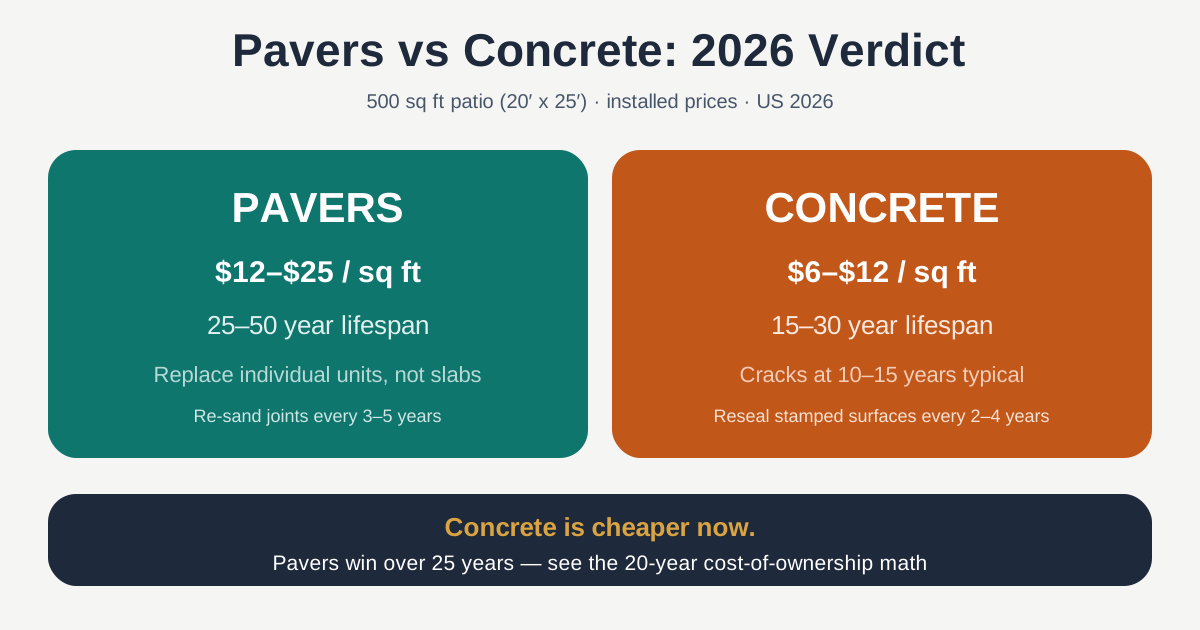
If you’re weighing a pavers vs concrete patio for the 20×25 (500 sq ft) space behind your house, here’s the straight answer from 15 years in the field: concrete is cheaper on day one; pavers win over 25 years. We refreshed these figures on . Concrete runs $6–$12 per sq ft installed; concrete pavers $12–$25. Concrete lasts 15–30 years; pavers 25–50. Here’s the full 2026 breakdown.
Pavers vs Concrete Patio at a Glance
Quick read on a paver patio vs concrete patio before the math:
| Feature | Concrete | Pavers |
|---|---|---|
| Cost, installed | Plain $6–$12/sq ft; stamped $10–$18; exposed aggregate $10–$16 | Concrete pavers $12–$25/sq ft; natural stone $18–$40 |
| 500 sq ft project | $3,000–$6,000 plain; $5,000–$9,000 stamped | $6,000–$12,500 |
| Lifespan | 15–30 years; cracks at 10–15 typical | 25–50 years |
| Maintenance | Reseal stamped every 2–4 years; crack repair | Re-sand + reseal every 3–5 years ($100–$300) |
| Repair | Crack/joint repair $3–$8/sq ft; major cracks need full replacement | Swap individual pavers, $5–$15/sq ft |
| Appearance | One pattern per stamped pour | Hundreds of patterns, colors, borders |
| Resale appeal | Neutral | Strong — buyers notice it |
Cost Comparison: Pavers vs Concrete in 2026
2026 math for 500 sq ft, installed — materials, base prep, and labor:
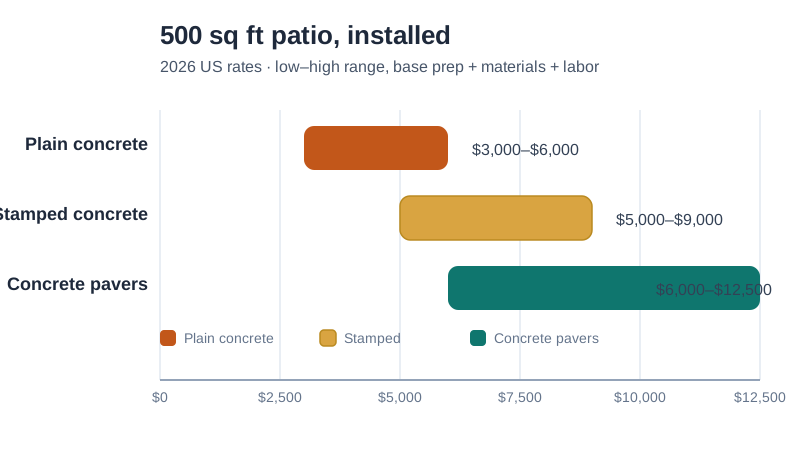
- Plain concrete: $3,000–$6,000
- Stamped concrete: $5,000–$9,000
- Exposed aggregate: $5,000–$8,000
- Concrete pavers: $6,000–$12,500
- Natural stone pavers: $9,000–$20,000
Paver patio cost surprises people: concrete pavers run $0.50–$3 per sq ft at the box store, while bagged mix runs $4–$8 per sq ft DIY. With pavers you pay for base prep and labor; with concrete, the material is the spend. Angi’s contractor data matches what we bid this year.
Stamped concrete cost hides a recurring line item: resealing every 2–4 years, and you can’t patch the pattern. Paver re-sanding runs $100–$300 every 3–5 years — cheaper, and DIY-friendly.
What We’ve Seen in 15 Years of Installations
Last spring we tore out a 7-year-old poured patio: cracked in three places, one edge heaved an inch, saw-cut joints spalling. The same month we re-sanded a 12-year-old paver patio a block away — still flat, level, square. That’s the pattern we see everywhere.
“I’d rather sell a customer a paver patio that needs a $150 re-sand in year four than concrete I know will be cracked by year ten.” — Mike Hartwell
In freeze-thaw climates — the US Northeast, most of Canada — the difference shows within a few winters. On New Zealand projects, interlocking clay pavers are the default garden surface.
Durability & Climate: Freeze-Thaw, Heat, Rain
For most yards, the pavers vs concrete patio decision comes down to movement. Concrete is one rigid slab: when the ground moves — frost, roots, settling clay — it cracks. Pavers sit as individual units on compacted gravel; they flex, settle together, and lift out for resetting.
- Freeze-thaw (US NE, Canada): pavers win — joints absorb the movement a slab can’t.
- Heat: both handle summer sun; dark concrete radiates more.
- Rain: permeable pavers let water soak through to the base, cutting runoff and filtering pollutants — the EPA highlights them in its Soak Up the Rain program.
Appearance & Design Options
Pavers offer hundreds of shapes, colors, and patterns — running bond, herringbone, basketweave — plus borders, inlays, and custom cuts for medallions. Extend the patio later by pulling edge pavers and continuing the pattern. Concrete patio vs pavers: concrete is a blank canvas; pavers are the finished product.
Stamped concrete is one pattern per pour, and it’s permanent. It reads as stone for a few years; then joints, color fade, and the fixed pattern show. Natural stone pavers ($18–$40/sq ft) are the top shelf.
Maintenance & Repair: The Long-Run Difference
| Task | Concrete | Pavers |
|---|---|---|
| Sealing | Reseal stamped every 2–4 years | Re-sand + reseal every 3–5 years |
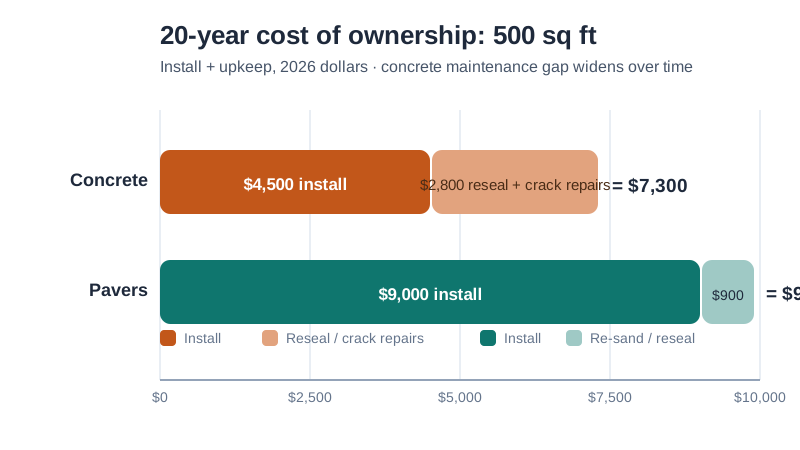
| 20-year upkeep | About $2,800 (resealing + crack repairs) | About $900 (re-sand, occasional reseal) |
| Local repairs | Crack/joint repair $3–$8/sq ft; patch shows | Replace units $5–$15/sq ft; invisible when done right |
Paver repair is a 20-minute job: pry out the unit, level the base, drop in a spare, sweep sand into joints, compact. Concrete crack repair is a patch that shows — and a cracked slab keeps moving.
Which Should You Choose?
Run the 20-year numbers and the gap closes fast: concrete totals about $7,300 (install plus resealing and crack repairs); pavers $9,900 including re-sanding — about 35% more, for a surface that outlasts concrete by a decade or more (figure 2).
So, pavers vs concrete patio — who should pick which:
- Tight budget this year: plain concrete, knowing it cracks.
- Freeze-thaw winters: pavers, no debate.
- DIY: pour concrete yourself; hire the base, lay the units yourself.
- Selling in 5–10 years: pavers read as a feature.
- Kids and pets: pavers — replace one unit, not a slab.
Poured patios hold up fine under an outdoor kitchen — see our outdoor kitchen cost guide for the surface demands of a full cooking station. Planning a pool deck? The same decision plays out in our pool deck coating comparison. And whatever you pick, budget the cover now: our patio cover cost guide shows the range.
Regional Pricing: Canada & New Zealand
Canadian and Kiwi readers: multiply the US figures below (CAD ×1.35, NZD ×1.65).
| Surface (500 sq ft, installed) | USD | CAD | NZD |
|---|---|---|---|
| Plain concrete | $3,000–$6,000 | $4,050–$8,100 | $4,950–$9,900 |
| Stamped concrete | $5,000–$9,000 | $6,750–$12,150 | $8,250–$14,850 |
| Concrete pavers | $6,000–$12,500 | $8,100–$16,875 | $9,900–$20,625 |
In New Zealand, interlocking clay pavers are the default patio material, so paver labor is competitive. In Canada, freeze-thaw dominates — CMHC’s construction guidance treats durable exterior surfaces as part of building for the climate. Either way: concrete first, pavers long-term.
Frequently Asked Questions
Are pavers better than concrete?
For lifespan, repairs, and cold climates, yes. Pavers last 25–50 years; concrete 15–30, cracking at 10–15. A damaged paver is a 20-minute swap; a slab is a project. Concrete only wins first cost: $6–$12 versus $12–$25. If you plan to stay put, pavers win the pavers vs concrete patio question.
Is a paver patio more expensive than concrete?
Up front, yes: 500 sq ft of pavers runs $6,000–$12,500 versus $3,000–$6,000. Over 20 years the gap shrinks to about 35% — pavers need only occasional re-sanding; concrete needs resealing and crack repairs.
How long do paver patios last?
25–50 years with a proper base. The pavers rarely fail; joints erode, so plan on re-sanding every 3–5 years ($100–$300). Concrete typically cracks at 10–15 and is done by 15–30.
Can you put pavers over concrete?
Yes, if the slab is sound. Add a thin gravel or sand layer, edge restraint, and enough height at doors and steps. Cracked or heaving concrete will telegraph through — we recommend tear-out.
Do paver patios crack?
Units can chip under point loads, but the patio doesn’t crack like a slab — pavers flex independently. Damaged units swap out at $5–$15/sq ft — the reason pavers win the repair argument.
Does stamped concrete crack?
Yes, eventually. Stamped concrete is still a slab: expect cracks at 10–15 years in cold climates. Control joints guide them, but a moving slab cracks regardless — and repairs show because the pattern won’t match.
Sources
- Angi — home project cost data and contractor pricing
- NADRA — North American Deck & Railing Association
- US EPA — Soak Up the Rain: Permeable Pavement
- CMHC — Canada Mortgage and Housing Corporation
