Plain concrete is the cheapest patio money can buy, and stamped concrete is the lookalike that pretends to be flagstone or brick. For a 400 sq ft (20×20) slab, the concrete patio cost in 2026 lands between $2,400 and $7,200 installed — entirely a question of finish. We pour concrete for a living and tracked 20 patio bids this year, plus every callback that followed. Here’s where the money goes and when stamped is worth double. Updated .
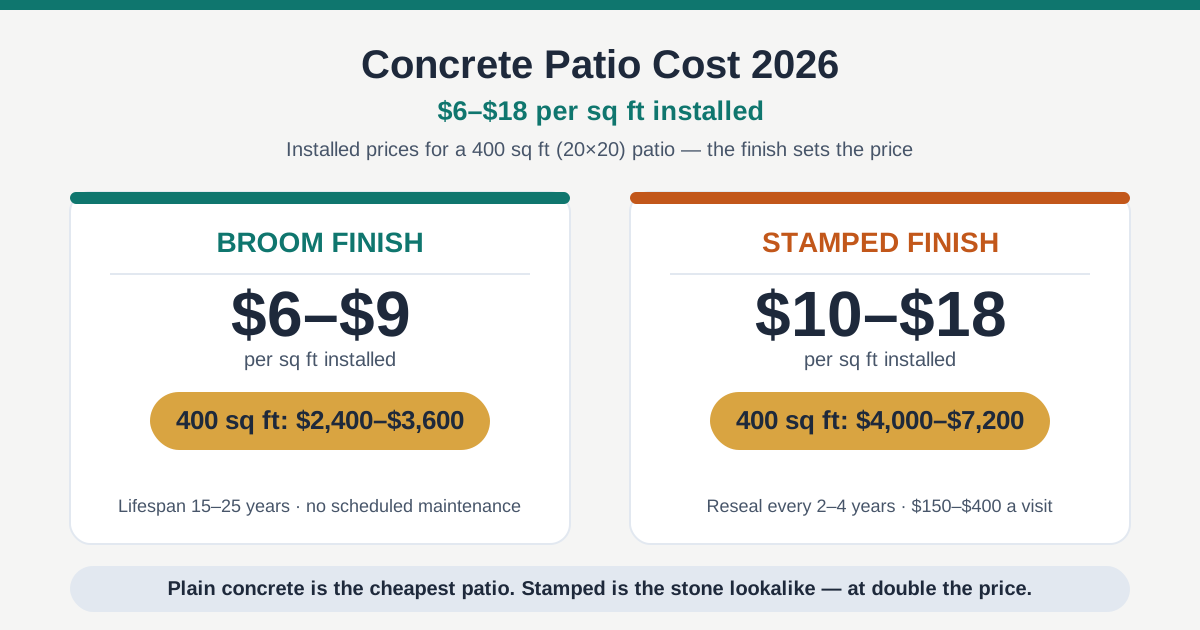
Concrete Patio Cost at a Glance
These are installed prices for a level, accessible 20×20 site — mix, reinforcement, gravel, labor, and finish. You’ll hear concrete patio per square foot pricing from every bidder; expect $6–$18 installed, matching Angi’s national data. Site prep, demolition, and permits are extra.
| Finish | Per sq ft | 400 sq ft total | Lifespan |
|---|---|---|---|
| Broom finish | $6–$9 | $2,400–$3,600 | 15–25 years |
| Plain / float | $6–$12 | $2,400–$4,800 | 15–25 years |
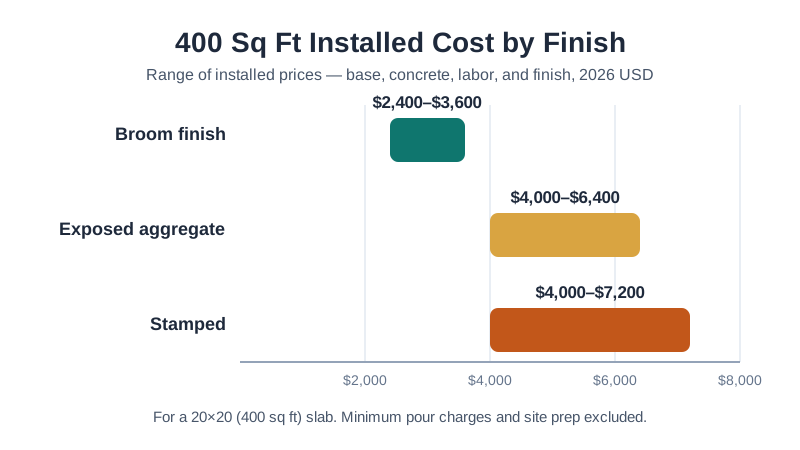
| Exposed aggregate | $10–$16 | $4,000–$6,400 | 20–30 years |
| Stamped | $10–$18 | $4,000–$7,200 | 15–25 years |
The full concrete patio cost range for a 400 sq ft slab is $2,400–$7,200 before extras.
Finishes Explained: Broom, Stamped, Exposed Aggregate
When clients ask for concrete patio ideas, the finish is the first fork and the biggest line item.
Broom finish: $6–$9 per sq ft
A stiff broom dragged across the wet surface leaves a fine, grip-friendly texture. It’s the cheapest finish, looks right behind any house, and needs nothing afterward. Half the patios we pour leave the site broom-finished.
Stamped concrete: $10–$18 per sq ft
This is the stamped concrete patio cost that surprises people: roughly double a broom finish. The money goes to texture mats, color hardener, release agent, and a crew working fast while the slab is wet enough to imprint. Done right, it imitates flagstone, brick, or slate — but it needs resealing every 2–4 years at $150–$400 a visit.
Exposed aggregate: $10–$16 per sq ft
A chemical retarder is sprayed on the fresh slab, then the top layer is washed off so rounded stones show through. The pebbly look grips better than smooth concrete and lasts longest. It still wants sealing every few years.
What Determines the Final Price
Six factors move the bid more than homeowners expect:
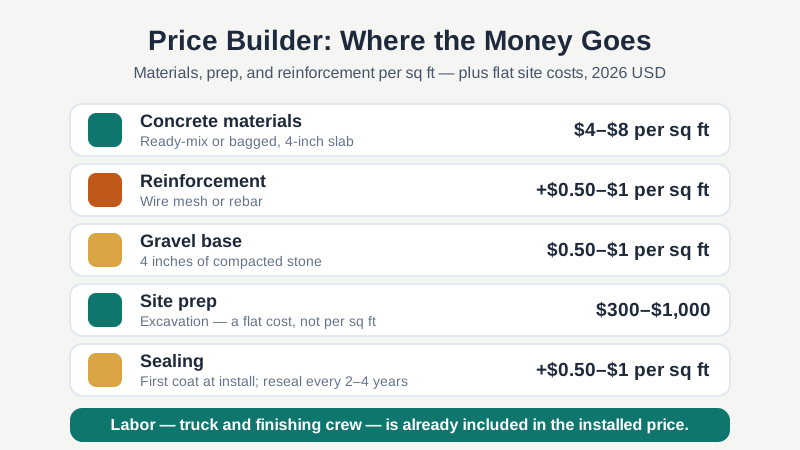
- Size and minimums. Larger slabs cost less per square foot, but most crews charge a minimum pour of $800–$1,200 — a 50 sq ft pad is not a fifth of a 250 sq ft price.
- Thickness. 4 inches is the patio standard; go 5–6 inches with rebar for vehicles, a fire table, or a spa.
- Reinforcement. Wire mesh or rebar adds $0.50–$1 per square foot. We always include it.
- Access. No truck access? Add a pump at $300–$600.
- Demolition. Removing an old slab runs $3–$6 per square foot plus hauling.
- Permits. Most municipalities require one; budget $100–$400.
Site prep is the hidden line: excavation runs $300–$1,000, and a compacted gravel base adds $0.50–$1 per square foot. Slope the slab 1/8 inch per foot away from the house — the EPA counts permeable pavements among green infrastructure practices, but grading away the foundation is the cheapest drainage fix. Skip the gravel and you’ll see it again as cracks.
Our Field Experience: 20 Patio Pours in 2026
What we did: Our crew quoted and poured 20 residential patios in 2026, tracking every bid, change order, and callback. Reference jobs: a 400 sq ft broom finish that closed at $3,100 — dead center of the $2,400–$3,600 band — and a 400 sq ft stamped job at $5,900. Both included gravel base, wire mesh, and sealer.
The six-month callback is real. Every hairline crack we visited ran through a section longer than 10 feet with no joint. Concrete cracks; control joints every 8–10 feet just decide where. On stamped jobs it’s different: faded sealer and owners who expected maintenance-free. Sealer is the maintenance, at $150–$400 every 2–4 years.
“The cheapest way to fix a crack is to never have it. Joints cost $0.50 a foot at pour time; cracks cost $500 after.” — Mike Hartwell
Stamped Concrete vs Pavers
Most clients choose between stamped concrete and pavers. Stamped costs less and reads as one seamless slab; pavers crack less visibly and repair in an afternoon. Our pavers vs concrete guide covers the decision, and the paver patio cost breakdown is the alternative price sheet.
| Comparison | Stamped concrete | Pavers |
|---|---|---|
| Up-front cost | $10–$18 per sq ft | $8–$30 per sq ft |
| Lifespan | 15–25 years | 25–50 years |
| Cracks | Visible, follow joints | Hairline, easy to hide |
| Repairs | Cut and patch | Lift and replace |
| Maintenance | Reseal every 2–4 years | Sweep and re-sand |
DIY Concrete Patio: What It Really Takes
Bagged mix is the wrong tool at patio scale. A 400 sq ft slab at 4 inches is about 5 cubic yards — over 360 bags, or $180–$220 per yard from a ready-mix truck plus a short-load fee. Home Depot’s patio guide has you excavate 8 inches, compact 4 of gravel, and set 2×4 forms; Lowe’s how-to confirms 4 inches is the residential standard.
Then the hard part: screeding, floating, and finishing 5 yards before the mix sets. A capable owner who preps on weekends and pours with three helpers finishes in a long weekend; most first-timers take a month and get a surface they hide under furniture. Rent a pump, keep the mix dry, cut joints the same day, and start before 9 a.m.
Regional Pricing: Canada & New Zealand
Canada. Multiply by about 1.35 for CAD: a broom finish runs CAD $8–$12 per square foot, so a 400 sq ft patio lands at CAD $3,240–$4,860; stamped runs CAD $14–$24 per square foot.
New Zealand. Multiply by roughly 1.65 for NZD: NZD $10–$15 per square foot broom, NZD $3,960–$5,940 for a 400 sq ft slab, and NZD $17–$30 stamped. One quirk: “concrete patio” in NZ usually means precast paving slabs laid on sand, not poured concrete — fewer finishers there, so expect premium pricing.
Frequently Asked Questions
How much does a concrete patio cost per square foot?
Most installed concrete patios run $6–$18 per square foot: $6–$9 broom, $6–$12 plain float, $10–$16 exposed aggregate, and $10–$18 stamped. Site prep and permits are extra.
Is stamped concrete worth the extra cost?
If you want stone or brick without the paver price, yes — it’s the best lookalike under $20 per square foot. It roughly doubles the concrete patio cost, and the sealer is recurring: $150–$400 every 2–4 years. Never want to reseal? Compare pavers.
How long does a concrete patio last?
15 to 30 years, depending on base, thickness, and climate. A 4-inch slab over 4 inches of compacted gravel with joints every 8–10 feet should clear 20. Hairline cracks are normal, not structural; sealing every few years extends the finish.
Does a concrete patio increase home value?
Yes. Angi’s research puts concrete patio ROI at 50–90%, with stamped finishes at the high end. You won’t recover the bill dollar-for-dollar, but a clean patio recovers more than most interior upgrades.
Can you pour concrete over existing concrete?
Yes, if the old slab is sound, drains, and isn’t cracked through — you need a bonding agent, and added height often collides with door thresholds. If the slab is merely ugly, a coating is cheaper and safer than a top pour; our pool deck coating guide covers those options.
How thick should a concrete patio be?
4 inches over 4 inches of compacted gravel is the standard spec for a residential patio. Go 5–6 inches with rebar if you’ll park a vehicle, spa, or heavy fire feature on it.
Sources
- Angi cost guide
- Angi home value research
- Home Depot patio guide
- Lowe’s concrete slab guide
- EPA green infrastructure
