— Painting is the budget option for a tired concrete pool deck, and it shows after a couple of seasons. In our 2026 testing, the best pool deck paint held its color 2–3 years before chlorine pitting, fade, and peeling appeared — a fair trade if the slab is sound and cash is tight. Here is what 25 jobs and a 600 sq ft test strip taught us.
Best Pool Deck Paint at a Glance
The 60-second verdict for 600 sq ft: 8–12 gallons for two coats, $320–$1,200 in materials. Want 5–10 years instead of 3? Our pool deck coating guide covers the longer-lasting route.
| Category | Our pick | Price/gal | Lifespan | Why it won |
|---|---|---|---|---|
| Best Overall | Behr Premium Concrete & Masonry Paint | $40–$80 | 2–3 yrs | Thick, forgiving roll on etched concrete |
| Best Budget | In the Swim Pool Deck Paint | $50–$90 | 2–3 yrs | Cheapest true pool-grade film, ~120 sq ft/gal |
| Best Epoxy | Rust-Oleum two-part pool epoxy | $80–$130 | 3–5 yrs | Hardest film against chlorine |
| Best Slip Resistance | Any acrylic + grit additive | +$15–$30/qt | 2–3 yrs | Wet COF reaches 0.6+; never skip it near water |
| Best Value per Sq Ft | Fixall single-part acrylic | $50–$90 | 2–3 yrs | Roughly $0.50–$0.90 per sq ft of material |
How We Tested
- Wet barefoot slip test: timed cross-steps on a soaked 10% slope, with and without grit.
- 2 p.m. heat reading: infrared surface temperature on the same 90°F full-sun afternoon.
- Chlorine splash zone: a 3-ft band by the pool rim, scrubbed weekly, inspected monthly.
- 12-month fade check: color-matched photos under identical lighting at months 0, 6, and 12.
Acrylic vs Epoxy vs Elastomeric: What’s Different
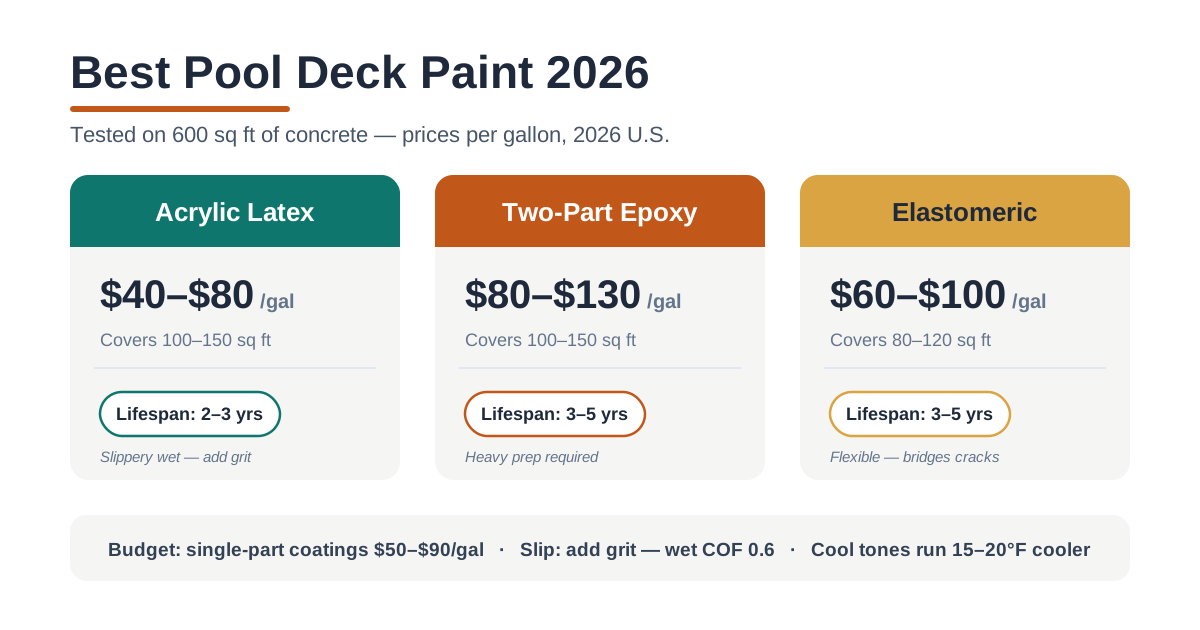
Three chemistries dominate the pool paint aisle, and each answers a different question: acrylic is cheap and easy, epoxy is hard and chlorine-proof, elastomeric flexes where concrete cracks. Single-part pool coatings from In the Swim and Fixall sit between the two — purpose-built for pool chemistry at a budget price. The best pool deck paint for your slab depends on how much movement, chlorine, and sun it sees.
| Type | Price/gal | Coverage | Lifespan | Prep | Pros / Cons |
|---|---|---|---|---|---|
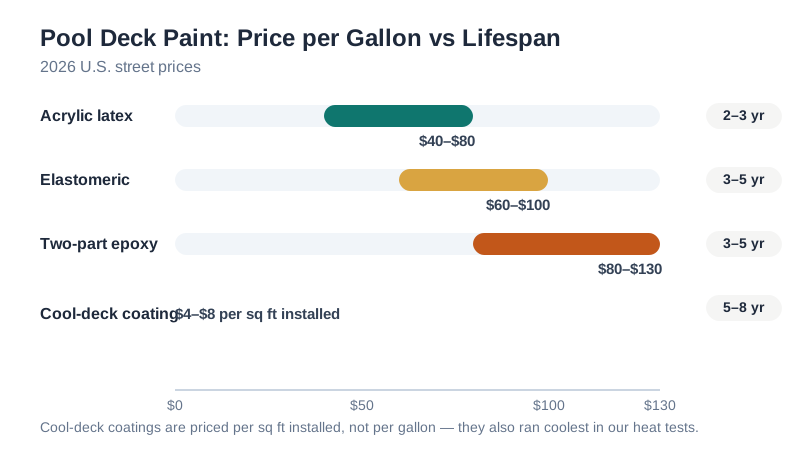
| Acrylic latex pool paint | $40–$80 | 100–150 sq ft | 2–3 yrs | Light | Easy, tints to any color / short life |
| Two-part epoxy | $80–$130 | 100–150 sq ft | 3–5 yrs | Heavy | Hardest film, best chlorine resistance / brittle |
| Elastomeric | $60–$100 | 80–120 sq ft | 3–5 yrs | Medium | Bridges hairline cracks / rubbery feel, collects dirt |
| Single-part pool coating | $50–$90 | ~120 sq ft | 2–3 yrs | Medium | Built for pool chemistry / paint lifespan |
Our Field Experience: 25 Pool Deck Paint Jobs
“Ninety percent of pool deck paint failures are prep failures, not product failures.”
Heat is the second killer: on the same 90°F afternoon, white read 138°F and cool gray 118°F — 15–20°F cooler on bare feet. Re-coat timing matters: acrylic is ready again at year 2–3, but epoxy must be re-coated while sound — once it chalks, strip and start over.
Slip Resistance: The Additive That Saves Lawsuits
Grip is not a property of paint — you add it. Every product we tested slipped wet until we mixed in grit. A $15–$30/qt skid additive in the first coat brought wet traction to a coefficient of friction of 0.6 — our target on any slip resistant pool paint job:
- Mix-in aggregate: silica or aluminum-oxide grit blended into the first coat, then top-coated smooth.
- Broadcast grit: scattered on the wet final coat; coarser, more control.
Microtexture — a fine sandpaper finish — grabs wet feet without trapping leaves or scrubbing marks. Slip barefoot at a 10% slope and the job is not done.
Pool Deck Paint Colors & Heat
Cool tones — light gray, tan, blue — win twice: they run 15–20°F cooler underfoot and fade slower under UV. White is cooler but blinding on sunny days; glare near a pool is a safety nuisance. Saturated colors look sharp one season, chalky the next. A cool deck paint system with a textured finish costs $4–$8 per sq ft installed and lasts 5–8 years.
Step-by-Step: Painting a Pool Deck
- Clean: power-wash at 2,500+ psi; remove oil, mildew, and old sealer.
- Etch: etching solution or dilute muriatic acid; rinse until neutral.
- Repair: fill cracks with flexible masonry patcher; let it cure fully.
- Prime: one coat of masonry primer; skip with self-priming formulas.
- Two coats: roll each coat 90° from the last, keeping a wet edge.
- Cure: keep feet off 24–48 hours; no furniture for a week.
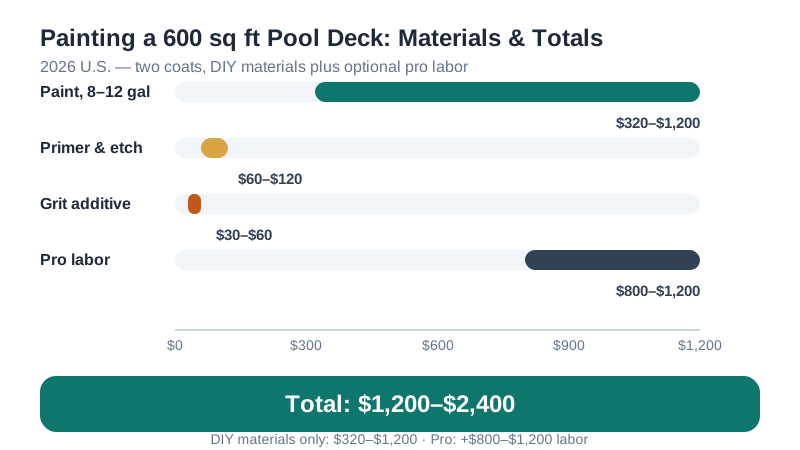
Tools run $40–$80: a 3/8-inch nap roller, extension pole, brush, tape. Materials for 600 sq ft: 8–12 gallons at $320–$1,200, grit $30–$60, primer or etch $60–$120. Pro labor adds $800–$1,200 — $1,200–$2,400 total. Cracked slab? Paint will not fix it — compare fresh concrete in our concrete patio cost breakdown first.
Regional Pricing: Canada & New Zealand
2026 rates put U.S. prices at roughly ×1.35 in CAD and ×1.65 in NZD.
| Scope | USD | CAD (×1.35) | NZD (×1.65) |
|---|---|---|---|
| Materials, 600 sq ft | $320–$1,200 | $430–$1,620 | $530–$1,980 |
| Pro total | $1,200–$2,400 | $1,620–$3,240 | $1,980–$3,960 |
New Zealand buyers face harsher UV — southern sun fades acrylic inside two years, so choose elastomeric or a cool-deck system in a light tone. Canadian pools do fine with acrylic if you honor the re-coat schedule.
Frequently Asked Questions
What is the best paint for a pool deck?
For most homeowners, the best pool deck paint is a concrete-grade acrylic — Behr Premium Concrete & Masonry Paint or In the Swim’s single-part coating — $40–$90 per gallon with a 2–3 year life you can re-coat without stripping. Want 3–5 years? Two-part epoxy, if you can handle prep.
How much does it cost to paint a pool deck?
Materials for a 600 sq ft deck run $320–$1,200 (8–12 gallons) plus $30–$60 for grit. With pro labor, the total is $1,200–$2,400; the paint is the smallest line item.
Is pool deck paint slippery?
Fresh paint is dangerously slick when wet. Mix a $15–$30/qt grit additive into the first coat, or broadcast aggregate on the wet top coat, and traction climbs toward a wet COF of 0.6. Never paint a surround without texture.
How long does pool deck paint last?
Acrylic and single-part pool coatings last 2–3 years; epoxy and elastomeric, 3–5; textured cool-deck systems, 5–8. Sun and chlorine shorten any of those — hence the light, cool color.
Can you paint over existing pool deck paint?
Yes, if the old film is sound — clean, etch, and skip nothing. If it peels or chalks, strip to bare concrete first; we have watched new coats peel with the old paint underneath. Unsure? Tape-test a 2-ft square.
What’s the best color for a pool deck?
Light gray or tan. Cool tones run 15–20°F cooler than dark colors, fade slower under UV, and skip the glare of pure white. A textured cool-deck coating in pale neutral outlasts any paint.
Sources
- Behr — concrete & masonry paints
- Sherwin-Williams — exterior concrete coating systems
- In The Swim — pool paints & deck coatings
- Rust-Oleum — pool & concrete coatings
Prefer permanent? Pavers never peel, fade, or need a re-coat weekend — see how they stack up in our patio pavers vs concrete comparison.
