Updated:
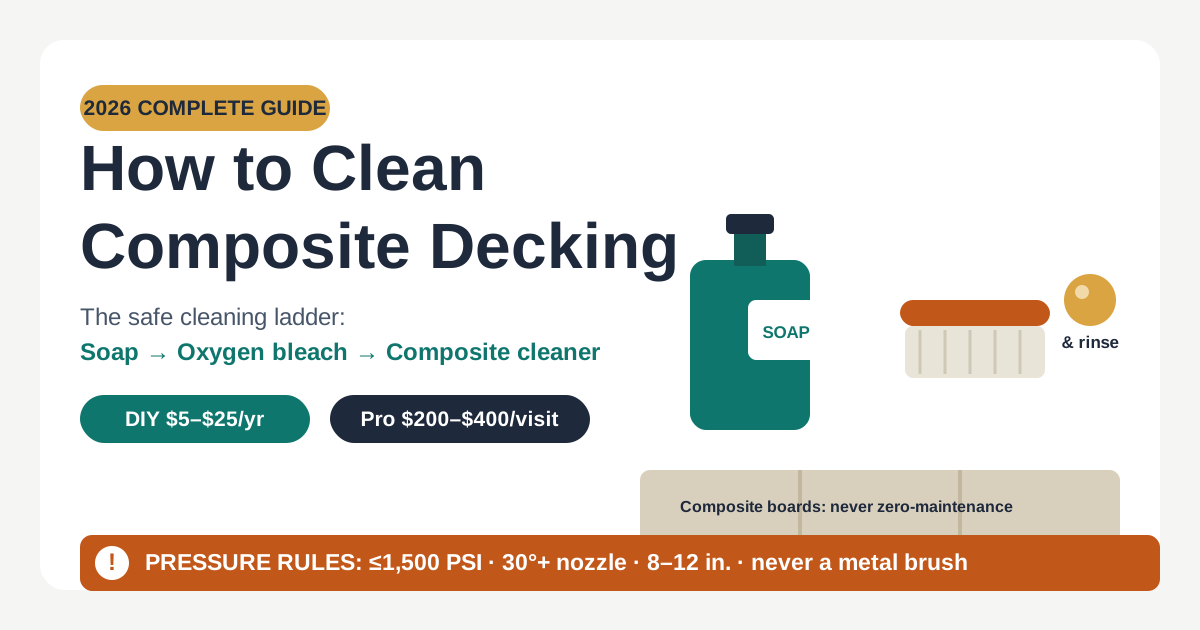
Composite decking sells itself on one promise: zero maintenance. After six years cleaning 30-plus composite decks for clients, we can tell you it’s only half true. How to clean composite decking is a real skill — do it right and the boards look new for decades; do it wrong and you can void a warranty in one afternoon. The good news: a proper clean costs $5–$25 in supplies and follows a simple ladder — soap, oxygen bleach, composite-specific cleaners.
How Often Should You Clean a Composite Deck?
Plan on a full composite deck cleaning once a year, in late spring. Decks in permanent shade or damp climates get a second pass in early fall — that schedule keeps mold from gaining a foothold. Sweep weekly; leaves hold moisture, and moisture grows the dark patches clients call “permanent stains.”
Not sure it’s dirty? Run the water-bead test: splash water on a board. Beads and rolls off — fine. Flattens and soaks in — dirt film, so climb the ladder below. (Choosing materials? Our composite vs wood comparison covers the trade-offs.)
What You Should Never Do
Manufacturers publish maintenance rules, and warranty departments enforce them — we’ve seen claims denied for each:
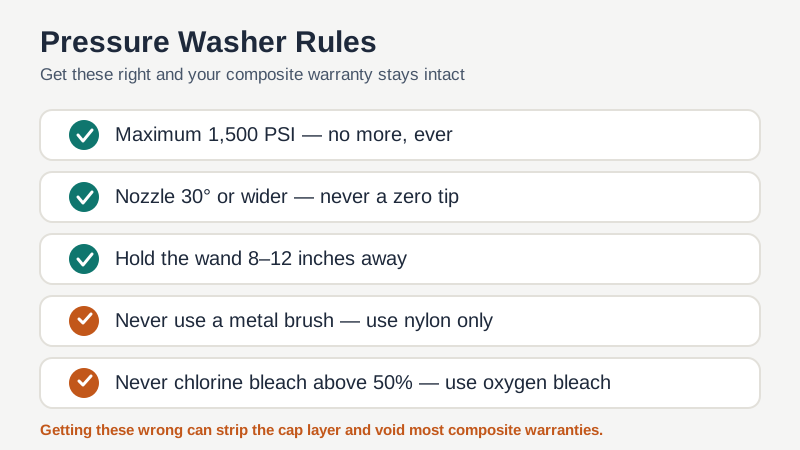
- Pressure washing above 1,500 PSI. High pressure cuts through the protective cap layer that carries the color. Stay at or below 1,500 PSI with a 30-degree nozzle or wider, wand 8–12 inches off the boards.
- Metal brushes. Steel bristles scratch the cap and leave scuff lines that collect dirt. Use soft nylon or plastic.
- Chlorine bleach above 50%. Concentrated bleach fades color and weakens the cap — use oxygen bleach instead. Same for acetone and paint thinner: solvents melt composite.
How to Clean Composite Decking: The Cleaning Ladder, Step by Step
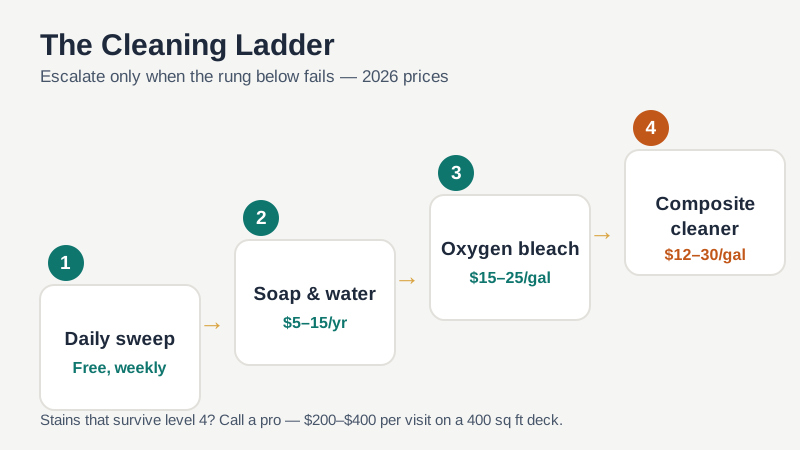
Every deck we service starts on the bottom rung and climbs only when a level fails.
Level 1 — Light: dish soap and water. Warm water, dish soap, a soft-bristle broom — scrub along the grain, rinse with the hose. Handles dust, pollen, and grime for $5–$15 a year. Most decks never need more.
Level 2 — Routine: oxygen bleach. When soap leaves a gray film, switch to an oxygen bleach cleaner — it lifts embedded dirt without chlorine’s fade risk. $15–$25 a gallon covers 500–800 sq ft.
Level 3 — Mold: oxygen bleach soak. Mold in a shaded corner needs dwell time: soak 10–15 minutes, then scrub. If it returns within a season, fix drainage and airflow instead of cleaning harder.
Level 4 — Deep stains: composite deck stripper. Runs $20–$40. Follow dwell times exactly — too long and decks go blotchy.
Between rungs two and three, most homeowners grab a composite-specific cleaner: Simple Green’s composite deck cleaner runs $12–$20 a gallon, 30 Seconds Outdoor Cleaner $15–$25, and Wet & Forget is a $18–$30-per-gallon spray-and-wait option that needs no scrubbing. All work — the ladder stays the same.
What We Learned Maintaining 30 Composite Decks
Field experience teaches how to clean composite decking better than any manual — we’ve earned ours across 30+ decks on our maintenance schedule:
The shade-corner mold story. A client swore her north-facing boards were fading. They weren’t — permanent shadow under a two-story eave had grown a mold bloom. A 15-minute oxygen bleach soak lifted it. We check shaded zones first; that’s where problems hide.
Sun-fade vs. dirt confusion. Another client nearly tore out his “faded” gray boards. One soap-and-water pass matched them to the railing installed two weeks earlier. Look for embedded dirt before you blame the sun — the fix is $10, not $3,000 in new decking.
The pressure-washer cap story. A homeowner borrowed a 3,100 PSI unit with a zero-degree tip to “refresh” his deck and stripped the cap off in stripes. The claim was denied — the damage violated Trex cleaning guidelines. Replacement ran over $4,000.
The warranty trap. Several manufacturers require annual cleaning and proof of it. We photograph each deck before and after every visit — that paperwork has saved claims.
Stain-by-Stain Guide
Here’s the stain-by-stain version of how to clean composite decking — the exact products we keep in the truck.
| Stain | Product | Method |
|---|---|---|
| BBQ grease | Dish soap + warm water | Blot, then scrub along grain with soft nylon brush |
| Wine | Oxygen bleach cleaner | Spray, wait 10 minutes, rinse |
| Mold / mildew | Oxygen bleach soak | 10–15 minute dwell, scrub along grain |
| Rust (furniture) | Oxygen bleach, then stripper | Soak 15 minutes; strip only if embedded |
| Paint | Composite deck stripper | Test a corner first, follow dwell time exactly |
Professional Cleaning: Is It Worth It?
A professional cleaning service charges $200–$400 per visit for a typical 400 sq ft deck. DIY supplies for the same job run $20–$60. So why do clients still pay us?
Hire a pro when the deck is large (over 600 sq ft), stains are old, you can’t kneel and scrub comfortably, or the deck must be show-ready before a sale. Pros also run the machinery safely — a mossy deck is slick. For routine annual cleaning, DIY keeps your warranty intact.
“The biggest mistake we see is homeowners buying power before they know how to use it. A $100 electric pressure washer at 1,500 PSI beats a $600 gas unit at 3,100 PSI — every time.” — Mike Hartwell, licensed general contractor
Regional Pricing: Canada & New Zealand
Prices above are 2026 US averages. In Canada, multiply by ~1.35: oxygen bleach CAD $20–$34 a gallon, a pro cleaning CAD $270–$540. In New Zealand, multiply by ~1.65: NZD $25–$41 a gallon, NZD $330–$660 for a pro visit. Kiwi readers: damp coastal regions grow mold faster, so clean twice a year even in full sun.
Frequently Asked Questions
Can you power wash composite decking?
Yes, within strict limits: 1,500 PSI or less, a 30-degree (or wider) nozzle, wand 8–12 inches away, spray moving along the grain. Anything more can strip the cap and void your warranty.
What is the best cleaner for composite decking?
Dish soap and water is the best first step. For embedded grime or mold, oxygen bleach is step two, and composite-specific cleaners (Simple Green, 30 Seconds, Wet & Forget) are formulated for these boards. The best way to clean composite deck surfaces is the mildest product that works.
How do you get mold off composite decking?
Apply an oxygen bleach cleaner, soak 10–15 minutes, scrub along the grain, rinse. For stubborn mold in shady corners, repeat — then check drainage and airflow so it doesn’t return.
Does composite decking need to be sealed?
No. Composite boards carry their color in the cap layer and never need stain or sealant — a key advantage over wood, which our staining vs. sealing guide explains. Sealing a composite deck can trap moisture and void the warranty.
How do you get stains out of composite decking?
Match the product to the stain: soap and water for grease, oxygen bleach for wine and rust, a stripper for paint or old set-in marks. Test a hidden corner first; never use metal brushes or concentrated chlorine.
Why does my composite deck look dirty?
Two culprits: embedded dirt that water no longer beads off, or a mold bloom in a shaded section. Run the water-bead test, then climb the ladder. Washed-out rather than dirty? Compare to a railing before assuming fade.
Sources
- Trex — official manufacturer, care & cleaning guidance
- TimberTech — official manufacturer, maintenance resources
- Simple Green — composite deck cleaning products
- Wet & Forget — spray-and-wait outdoor cleaners
