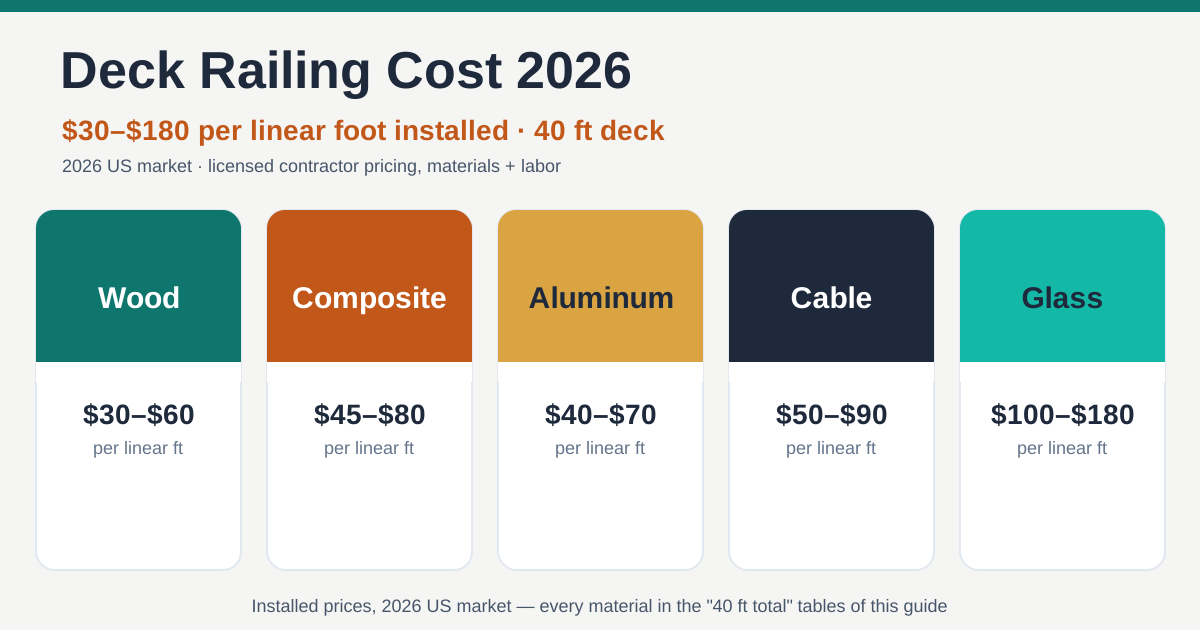
The deck railing cost question is where most deck budgets go sideways. Railing runs roughly 10% of a total deck build — and 100% of the safety. In 2026 we’re quoting wood rails at $30–$60 per linear foot installed, composite at $45–$80, and glass up to $180. On a typical 40-foot replacement job, that’s $1,200 to $7,200 before you touch a single post. Code comes first: residential rails sit 36 inches high with no opening wider than 4 inches.
Deck Railing Cost at a Glance
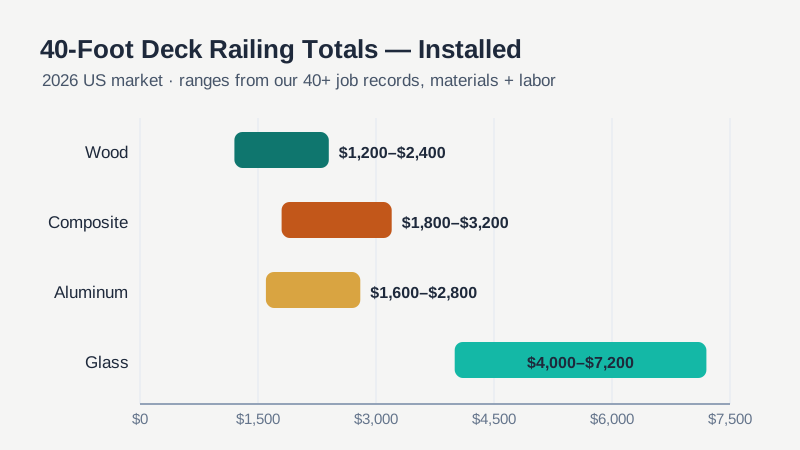
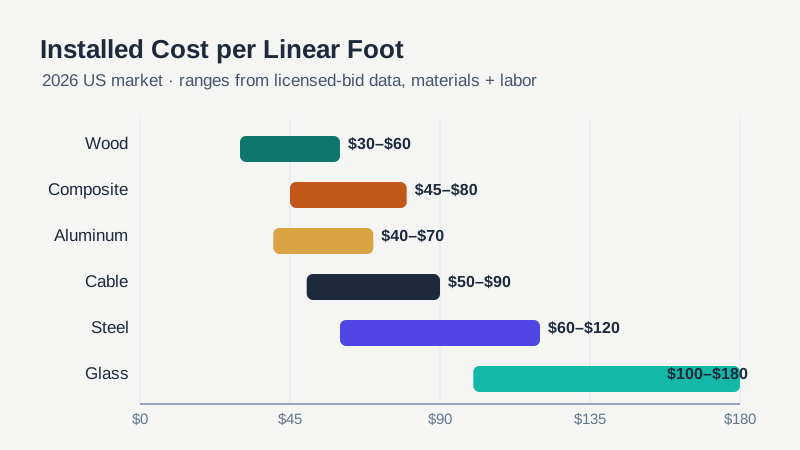
Here’s the 2026 deck railing cost picture for a 40-foot deck, installed by a licensed crew with mid-range materials. Per-linear-foot prices include posts, rails, balusters, fasteners, and labor.
| Material | Installed / linear ft | 40 ft deck total | Lifespan |
|---|---|---|---|
| Wood (pressure-treated) | $30–$60 | $1,200–$2,400 | 10–15 years |
| Composite | $45–$80 | $1,800–$3,200 | 25–30 years |
| Aluminum | $40–$70 | $1,600–$2,800 | 30+ years |
| Steel cable | $50–$90 | $2,000–$3,600 | 20–30 years |
| Steel / iron | $60–$120 | $2,400–$4,800 | 30+ years |
| Glass | $100–$180 | $4,000–$7,200 | 25+ years |
Totals line up with Angi’s 2026 cost data and Home Depot and Lowe’s material pricing; add $200–$500 for demo, plus $20–$50 an hour for hired labor.
Code Rules That Decide Your Design
Before cost comes code, and code sets the price. Three rules drive every railing decision:
- 36 inches high — the residential guard height in the International Residential Code (IRC R312), enforced by most U.S. jurisdictions.
- The 4-inch sphere rule — no gap a 4-inch sphere can pass through: balusters under 4 inches, cables under 3 once you allow for sag.
- A graspable top rail — where the rail doubles as a handrail, it must measure 1¼–2 inches across and stay continuous.
Why codes change cost: a 36-inch rail needs two cable runs where a 30-inch one needed one, and the sphere rule adds $15–$25 a linear foot of cable hardware. Most cities require a permit when you replace posts or change height — inspection fees run $100–$400. NADRA publishes the deck safety standards most inspectors enforce.
Railing Materials Compared
Every material changes price, look, and upkeep. Six options cover 95% of the decks we build.
Wood
Pressure-treated pine is the budget king at $15–$30 a linear foot DIY; cedar runs about 30% more. It needs sealer or stain every couple of years or it grays and splinters — our deck staining vs sealing guide covers the routine. Expect 10–15 years with care, less in damp climates.
Composite
Composite railing cost runs about 40% higher than wood but never needs painting, resists rot, and matches composite decking — see our composite vs wood decking comparison first. At $35–$60 a foot DIY, it’s the low-maintenance 15-year sweet spot.
Aluminum
Aluminum railing cost lands between wood and composite and wins on corrosion: powder coat shrugs off pool chemicals and salt air where steel rusts and wood rots. Materials run $25–$45 a foot DIY; hollow rails install fast and last 30-plus years.
Steel Cable
Thin 5/32-inch cables on wood or steel posts give an open view. The catch is tension: hardware runs $30–$50 a foot DIY, and cables stretch — space them under 3 inches to stay legal.
Steel / Iron
Ornamental steel delivers the classic estate look — scrollwork, square spindles, powder-coat black or white. It needs heavier framing and a paint touch-up each decade.
Glass
Frameless glass preserves the view and handles wind, but tempered panels and stanchions add up fast. It’s the premium choice for oceanfront decks — and the most expensive railing we install.
Our Field Experience: 40+ Railing Jobs
The cable-fail story: a $40-a-foot cable kit went untensioned and a ball rolled through a 5-inch gap. Inspection failed; re-tensioning plus a mid-run cable cost $450. The corrosion story: aluminum brackets inside a pool’s splash zone pitted after three years and stained the decking; stainless sat untouched. Poolside and coastal bids get stainless hardware, no exceptions.
“A railing is the one part of a deck you can’t negotiate with. The inspector measures, and the 4-inch sphere doesn’t care what the railing cost.” — Mike Hartwell
Deck Railing Ideas by Style
Deck railing ideas start with budget, then lifestyle. Five styles we install most:
- Modern cable: black aluminum posts with 3/16-inch cable — $50–$90 per ft, clean sightlines, annual tension check.
- Classic wood: painted white or stained cedar with square balusters — $30–$60 per ft, timeless, cheapest to refresh.
- Farmhouse: thick wood top rail, 2×2 balusters — the budget darling at $25–$45 per ft; spacing still passes the sphere.
- Coastal aluminum: white powder coat, zero maintenance, $40–$70 per ft — the default in salt air.
- Industrial steel: black steel/iron with heavy spindles — $60–$120 per ft, warehouse-loft looks on a deck.
DIY vs Hiring a Pro
Your deck railing cost splits into materials, labor, and risk. Materials-only DIY: wood $15–$30, aluminum $25–$45, composite $35–$60, cable $30–$50 per linear foot. Installed prices roughly double once labor ($20–$50 an hour) and $200–$500 of demo stack up.
Where DIY fails: height off by an inch, balusters 4¼ inches apart, cable sag after tensioning, posts screwed to deck boards instead of framing. Posts are structural — through-bolted to joists or set in footings, never lagged to the fascia.
Railing is roughly 10% of a full deck’s cost, and skipping it in the estimate lands people in the permit office twice — our deck building cost guide shows the whole picture.
Regional Pricing: Canada & New Zealand
Canada & New Zealand pricing: multiply U.S. figures by 1.35 for CAD and 1.65 for NZD. A $2,600 composite install becomes about CAD $3,510 or NZD $4,290; a $6,300 glass install, CAD $8,505 or NZD $10,395. Canadian materials run 10–20% higher before conversion; permits land around $150–$500.
New Zealanders, note the difference: NZ Building Code F4 requires a 1,000 mm (about 39-inch) guard height on decks over one meter — higher than the U.S. 36 inches — and baluster gaps are capped at 100 mm. Structural work needs a Licensed Building Practitioner sign-off.
Frequently Asked Questions
How much does it cost to replace deck railing?
On a 40-foot deck, deck railing cost lands at $1,200–$2,400 for wood, $1,800–$3,200 for composite, and $4,000–$7,200 for glass, installed. Add $200–$500 for demo plus $100–$400 in permit fees.
What is the cheapest deck railing?
Pressure-treated wood: $15–$30 per linear foot DIY, $30–$60 installed; cedar costs 30% more and looks better. For zero maintenance on a budget, aluminum at $40–$70 installed is the runner-up.
What is the most expensive deck railing?
Frameless glass, at $100–$180 per linear foot installed — $4,000–$7,200 for a 40-foot deck. Ornamental steel runs second at $60–$120 per foot.
Do I need a permit to replace deck railing?
In most U.S. jurisdictions, yes, when you replace posts or change height — and always when the deck sits more than 30 inches off the ground. The inspector measures height and baluster spacing against the 4-inch sphere, so pull the permit before you cut lumber.
How high does deck railing need to be?
36 inches for residential decks in the U.S. under the IRC. New Zealand’s code requires 1,000 mm (about 39 inches); Canada matches the U.S. rule.
Is cable railing safe for kids?
Yes, when built to code: cable spacing under 3 inches keeps every opening below the 4-inch sphere limit, and the top rail sits at 36 inches. Keep cables tensioned — sag is what turns a safe rail into a climbing frame.
Sources
- Angi — railing cost data
- Home Depot — railing materials & pricing
- Lowe’s — railing kits & materials
- NADRA — North American Deck & Railing Association
