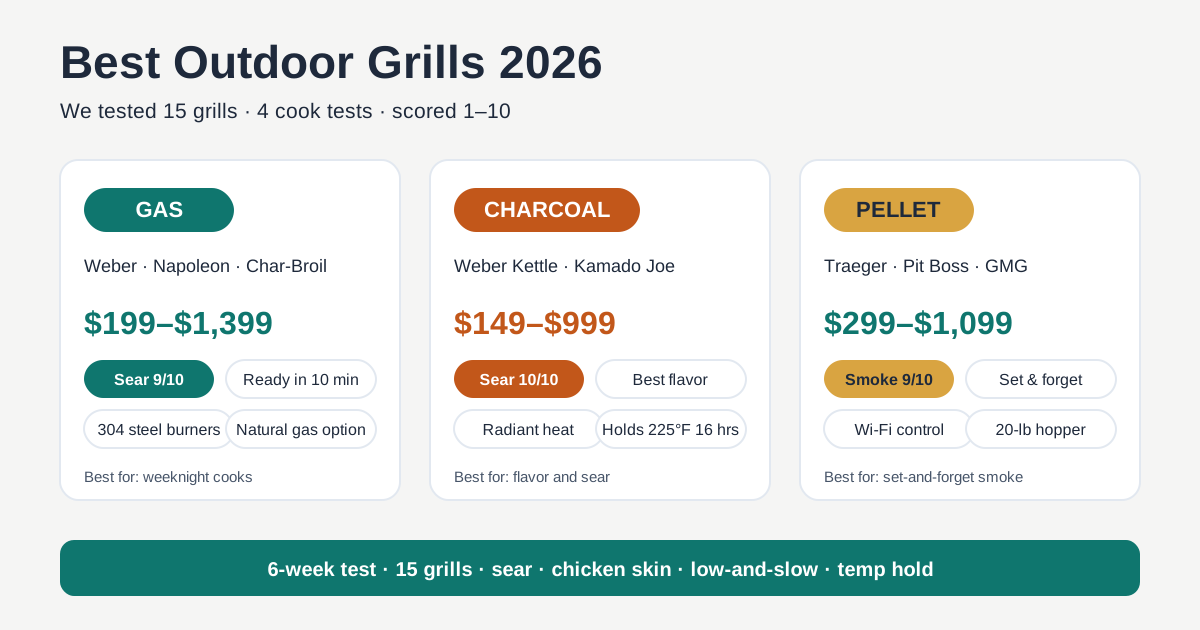
We cooked on 15 of the best outdoor grills this spring during outdoor kitchen builds across three states. The verdict: no fuel type wins outright. Gas covers weeknights in ten minutes; charcoal sears better for the money; pellet grills run set-and-forget smoke you can track from your phone. Buy for your cooking style, not the hype. Below, the picks that earned a spot on our install list, at three price points per fuel.
Best Outdoor Grills at a Glance
| Winner | Grill | Fuel | Price | Why it won |
|---|---|---|---|---|
| Best Overall Gas | Weber Genesis | Gas | $899–$1,399 | Even heat, 9/10 sear |
| Best Budget | Weber Kettle | Charcoal | $149–$189 | 9/10 sear under $200 |
| Best Charcoal | Kamado Joe Classic | Charcoal | $699–$999 | 10/10 sear, holds 225°F |
| Best Pellet | Traeger Ironwood | Pellet | $1,099 | Set-and-forget Wi-Fi smoke |
| Best Built-In | Built-in gas head | Gas | $1,500–$5,000 | Permanent island install |
How We Tested
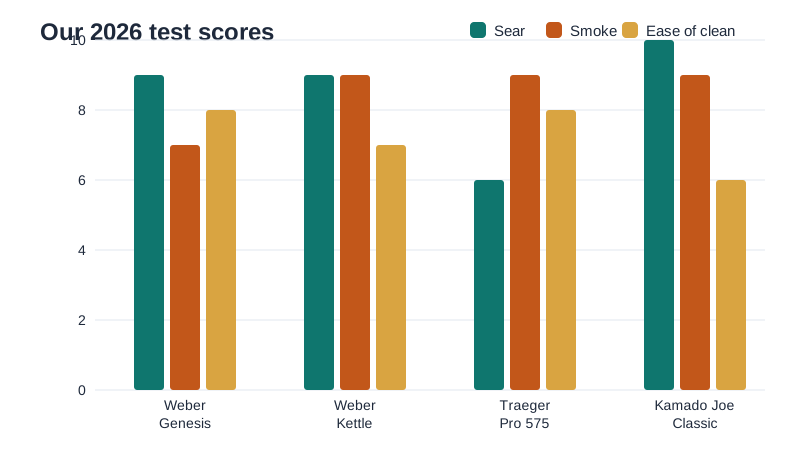
Over six weeks this spring we ran 15 of the best outdoor grills the way you actually cook. Each unit got four tests: a sear test on New York strips, a skin-crisp test on chicken thighs, a low-and-slow smoke at 225°F, and a two-hour temperature hold. We scored sear, smoke flavor, ease of cleanup, and build quality from 1 to 10, timed cleanup with the tools in the box, and priced every unit from live listings.
“The most expensive grill we tested failed the sear test, and a $149 kettle won dinner night after night. Price never told the story — heat distribution did.” — our crew lead, 12 seasons of grill builds
The Best Gas Grills 2026
Gas is for cooks who fire the grill twice a week after work: push a button, wait eight minutes, and the grate is at 500°F. In our testing, the Weber Genesis ($899–$1,399) is the best gas grill 2026 money can buy below $1,400 — even heat, a 9/10 sear, and 304 stainless burners that outlast cheaper 430 alloy. The smaller Spirit ($449–$599) cooks evenly for a decade.
Napoleon‘s Rogue line ($699–$1,000) is the value pick — infrared searing and rotisserie-ready at Genesis-adjacent prices, with 304 stainless burners standard. Char-Broil ($199–$499) gets you three burners and a lid for under $300.
Two spec numbers you can ignore. BTU: a 30,000–60,000 rating matters far less than burner design — we seared better on a well-spaced Genesis than on grills with 60,000 BTUs of badly placed fire. And 304 stainless shrugs off salt air; 430 is the budget alloy. Grates: cast iron sears hardest but rusts; stainless wipes clean.
The Best Charcoal Grills 2026
Charcoal wins on flavor because radiant charcoal runs 600–900°F and sears with dry radiant energy instead of heated air — the crust you can’t fake. That’s why the Weber Kettle ($149–$189) is the best charcoal grill value ever made — 9/10 sear and 9/10 smoke — and the grill we installed most in 2026.
Step up to the Performer ($349) with its worktable and gas ignition, or the cast-aluminum PK Grill ($399). The serious step is ceramic: the Kamado Joe Classic ($699–$999) scored a perfect 10 on sear and held 225°F for 16 hours on one load of lump charcoal. The tradeoff is a learning curve — ceramic shells and vents take a few practice cooks to trust.
Prefer a flame to gather around? Our best fire pits guide covers the gas and wood-burning options we install.
The Best Pellet Grills 2026
Pellet grills trade hands-on ritual for automation: an auger feeds hardwood pellets while a controller holds your target temperature. In that set-and-forget niche, the Traeger Ironwood ($1,099) is the best pellet grill we’ve tested at any price — 9/10 smoke flavor, a smoke boost mode, and Wi-Fi that pings your phone when the stall ends. The Pro 575 ($599–$799) shares the controller with less cooking area.
On a budget, Pit Boss ($299–$499) pairs automation with a sliding sear plate so one grill covers smoke and burgers; Green Mountain ($399) undercuts everyone on Wi-Fi models. Just know pellet fire is indirect by design — our Pro 575 scored 6/10 on sear.
Fuel math: pellets run about $1 per pound, and a full 20-pound hopper lasts 8–20 hours depending on temperature — roughly $20 per hopper, or two to four a month.
Comparison Table: Sear, Smoke, Cleanup
Here are the six finalists and the scores behind our best outdoor grills verdicts; retail prices were confirmed against live listings on BBQGuys.
| Brand / model | Fuel | Price | Sear | Smoke | Clean-up |
|---|---|---|---|---|---|
| Weber Genesis | Gas | $899–$1,399 | 9 | 7 | 8 |
| Weber Spirit | Gas | $449–$599 | 8 | 6 | 8 |
| Weber Kettle | Charcoal | $149–$189 | 9 | 9 | 7 |
| Kamado Joe Classic | Charcoal | $699–$999 | 10 | 9 | 6 |
| Traeger Pro 575 | Pellet | $599–$799 | 6 | 9 | 8 |
| Pit Boss | Pellet | $299–$499 | 6 | 8 | 7 |
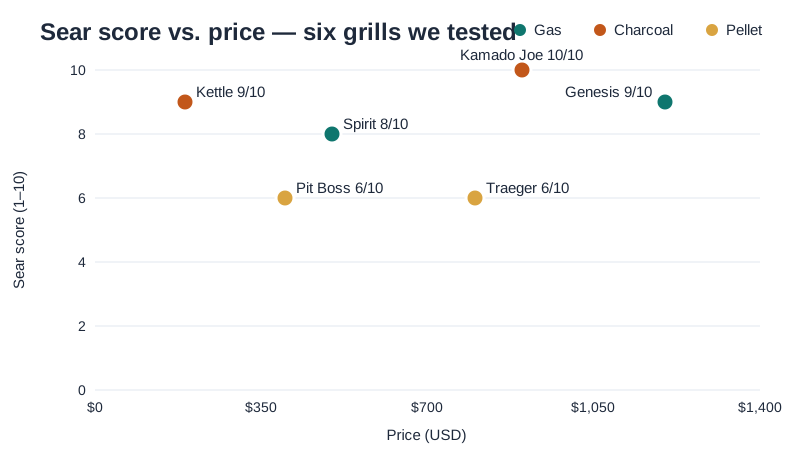
Read the pattern: sear score does not track price — the $189 Kettle out-sears a $799 pellet grill, and the $899 Kamado Joe beats everything. Price buys durability and even heat; our pick depends on how you cook.
Built-in vs. Freestanding
Freestanding grills run $199–$1,400 and stay replaceable. Built-in heads run $1,500–$5,000, and the island around them — framing, stone veneer, cabinets — typically doubles that tab.
Built-in pays off when the grill sits at the center of an outdoor kitchen: permanent counter, wind protection, a clean look — at the cost of flexibility and ventilation. The head usually lands at 25–35 percent of the total we priced in our outdoor kitchen cost guide.
Regional Pricing: Canada & New Zealand
All prices above are USD. In Canada, multiply by about 1.35: the $189 Kettle lands near CAD $255 and the $1,199 Genesis near CAD $1,619. In New Zealand, use roughly 1.65: the Genesis runs about NZD $1,978 and a $699 Kamado Joe about NZD $1,153. Duties and local markups push street prices higher.
New Zealand note: bottled LPG is the standard fuel for most grills there — residential natural gas is uncommon. Check the cylinder fitting and regulator before you buy. And for Canadian shoulder seasons, a patio heater keeps the dining zone usable.
Frequently Asked Questions
What is the best outdoor grill brand?
Weber is the safest answer across gas and charcoal — the Kettle and Genesis earned it through decades of even heat and easy parts support. Traeger owns the pellet niche; Napoleon undercuts Weber on features per dollar. Match fuel to your cooking style: the best outdoor grills of 2026 are the ones you’ll actually use.
Gas vs. charcoal vs. pellet — which is best?
Gas for weeknight speed, ready in ten minutes. Charcoal for the best sear per dollar. Pellet for set-and-forget smoke with Wi-Fi monitoring. Pick the style you’ll cook most.
How much should I spend on a grill?
$200–$500 buys a decent starter that lasts five to eight years. $600–$1,400 hits the sweet spot: 304 stainless burners, even heat, a decade of service. Budget $1,500 and up for a built-in head, plus the island.
Do pellet grills smoke as well as charcoal?
Close, on low-and-slow cooks — our pellet finalists scored 9/10 for smoke flavor at 225°F. Charcoal still wins at high heat, where radiant energy adds flavor a pellet fire pot can’t.
What’s the best grill for a beginner?
A Weber Kettle at $149–$189 teaches charcoal fundamentals cheaply; the Spirit at $449–$599 removes the learning curve with push-button gas. Skip the ceramic kamado until you have a season under your belt.
How long do gas grills last?
Budget models last five to eight years. Grills with 304 stainless burners and a cover last 10–15 — we’ve pulled 12-year-old Genesis units into builds that still cook level.
