— Hot tub prices run from $400 inflatable models to $30,000-plus premium installations, a spread that pushes many buyers into the wrong tier. For a 4–6 person household, the best hot tubs land in the $6,000–$15,000 standard range — but the purchase price is the smaller half of the story. The real cost is running it: electricity, chemicals, filters, and repairs add up to $600–$1,500 a year nobody budgets for.
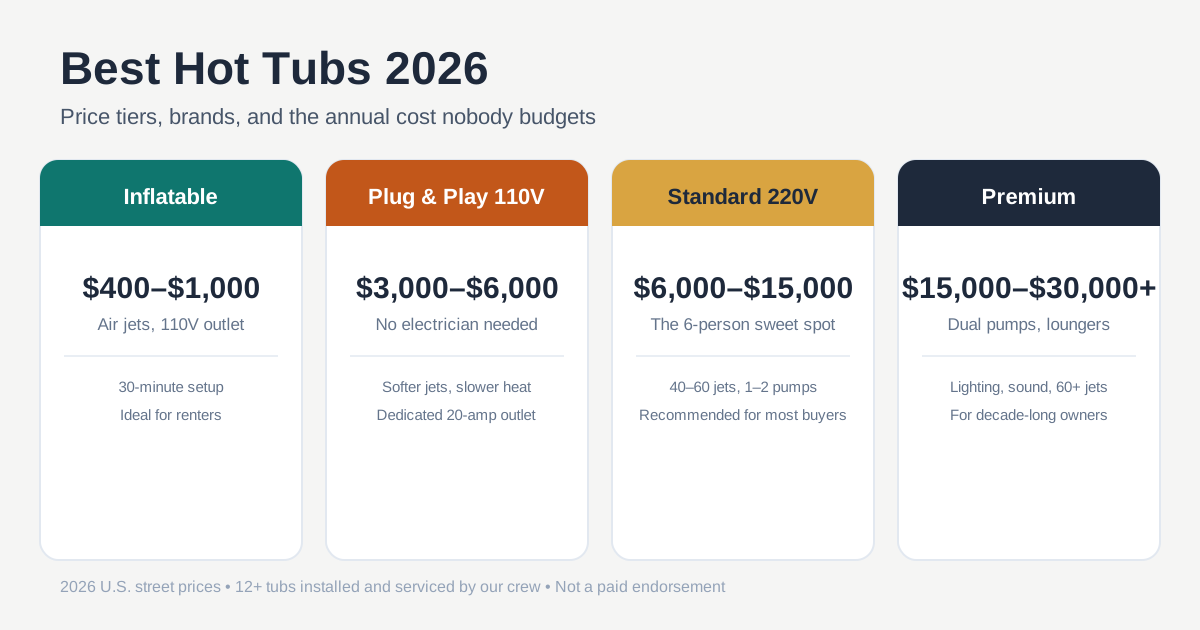
Best Hot Tubs at a Glance
The 60-second version, from tubs our crew has installed. 2026 U.S. street prices for 4–6 person models.
| Category | Our pick | 2026 price | Why it wins |
|---|---|---|---|
| Best Overall | Hot Spring | $6,000–$20,000 | Most efficient insulation we have measured |
| Best Value | Tuff Spas | $4,000–$8,000 | Full 220V jets at half the price |
| Best Luxury | Jacuzzi | $7,000–$20,000 | Trusted name, strong dealer network |
| Best Plug-and-Play | 110V models (Hot Spring Jetsetter, similar) | $3,000–$6,000 | No electrician — 20-amp outlet; softer jets |
| Best Inflatable | Intex PureSpa | $400–$1,000 | 30-minute setup; ideal for renters |
How We Evaluated
We did not rank these tubs from spec sheets. Here is how we separated the best hot tubs from the merely pretty: over three years our crew installed and repaired 12+ tubs on client decks and patios, grading jet pressure, energy draw on a clamp meter, winter heat loss, cover fit, and dealer warranty response. Dealer support earned real points — a great tub with a dealer 200 miles away loses to a good tub with a tech 20 minutes out.
Hot Tub Price Tiers Explained
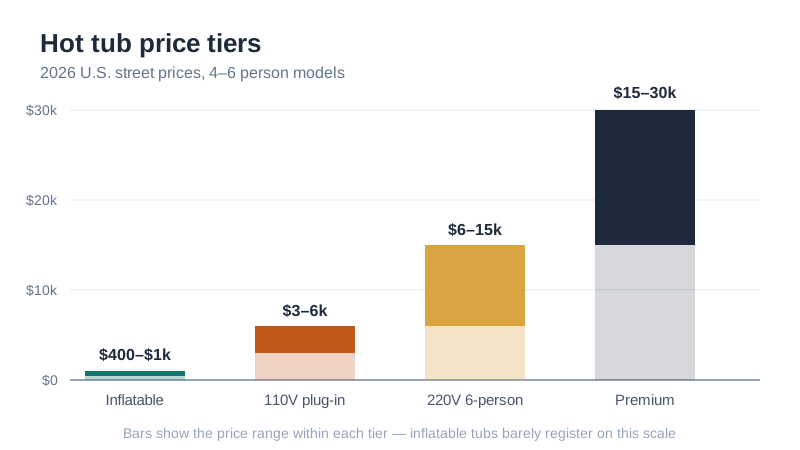
In 2026, hot tub prices cluster into four tiers — each one changes more than the price tag.
| Tier | Price | Jets & power | Install | Who it fits |
|---|---|---|---|---|
| Inflatable | $400–$1,000 | Air jets, 110V | 30 min setup | Renters, first-timers |
| Plug-and-play 110V | $3,000–$6,000 | Fewer, softer jets | Free — existing outlet | Small households |
| Standard 220V 6-person | $6,000–$15,000 | 40–60 jets, 1–2 pumps | $800–$2,500 electrical | Most buyers |
| Premium 6–8 person | $15,000–$30,000+ | Dual pumps, loungers, sound | Plus crane $400–$800 | Long-term owners |
The jump that surprises people is inflatable to plug-and-play: $400 to $3,000 — until you sit in both. An inflatable has air bubbles and a constantly running pump; a $4,000 hard-shell tub has real seats, real jets, and insulation. Moving to 220V doubles jet strength and quadruples heater wattage.
Premium tubs buy experience, not soak: dual pumps, 60+ jets, lighting, and audio. Soak three times a week for a decade and the math works; for guests twice a year, stay standard and spend the difference on the pad.
Best Hot Tub Brands 2026
No ranking of the best hot tub brands is universal, but after a dozen installs, here is how we separate them.
Jacuzzi
The brand that made the category, $7,000–$20,000, with the best dealer and warranty network in the industry.
Bullfrog Spas
$8,000–$18,000. Modular jet-pack panels swap therapy jets as bodies change or two people want different pressure.
Hot Spring
$6,000–$20,000. The efficiency champion in our testing — the lowest monthly bills we measured. Our default pick for cold climates.
Arctic Spas
$8,000–$22,000. Serious cold-weather engineering; service varies by region, so confirm the local tech.
Master Spas
Mid-range pricing across a wide lineup, from compact 110V sizes to swim spas; good value with a huge owner community.
The Real Cost of Owning a Hot Tub
The annual hot tub cost nobody prints on the showroom floor, for a 6-person 220V tub used three times a week:
- Electricity: $20–$60/month ($240–$720 a year), by climate.
- Chemicals: $15–$30/month ($180–$360 a year) for sanitizer, pH adjusters, and shock.
- Filters: $30–$60 a year for a replacement set.
- Cover: $200–$500 every five years — a sealing cover beats an upgraded shell.
- Repairs: $100–$300 a year averaged for pumps, heaters, and seals.
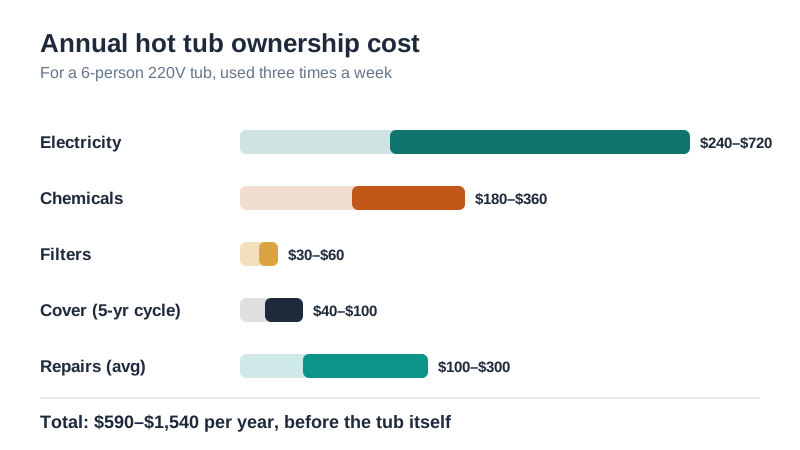
Add it up: $590–$1,540 a year before the tub. Over a decade of use, running costs rival the purchase price — buy the most insulated shell you can afford. Even the best hot tubs shrug off weather only with a cover that fits — a warped one is our most common repair call.
“Ninety percent of the tub failures we get called out for trace back to installation: a pad that settled, a circuit that was undersized, or a cover that never fit.” — Mike Hartwell, licensed general contractor
Half the value of a tub is the patio around it — add lounge seating from our best patio furniture picks for somewhere dry to land.
Installation: Deck, Concrete & Electrical
A 6-person tub holds about 400 gallons — filled and occupied, 5,000–7,000 pounds. A 4-inch concrete pad or compacted paver base handles it ($1,000–$3,000). Decks are the risk: a typical 10-foot span holding 5,000+ pounds plus six wet adults is a question only an engineer should answer — we have walked away from two installs when the joist math failed. The pad takes constant moisture, and our pool deck coating guide covers grip and waterproofing.
Electrical runs $800–$2,500 for a licensed electrician to run a dedicated 220V line with GFCI; trench runs cost the most. Delivery is $500–$2,000, plus a crane at $400–$800 if access is tight. Measure the path from street to pad — we have watched a 400-pound tub lose to a 36-inch gate.
If winter soaks are the plan, a fire pit beside the tub stretches the season into fall — our fire pit cost breakdown shows the numbers.
Regional Pricing: Canada & New Zealand
U.S. dollars above. Using 2026 planning rates (×1.35 CAD, ×1.65 NZD), a 6-person tub converts like this:
| Tier | USD | CAD (×1.35) | NZD (×1.65) |
|---|---|---|---|
| Plug-and-play | $3,000–$6,000 | $4,050–$8,100 | $4,950–$9,900 |
| Standard 220V | $6,000–$15,000 | $8,100–$20,250 | $9,900–$24,750 |
| Premium | $15,000–$30,000 | $20,250–$40,500 | $24,750–$49,500 |
Canadian buyers should weight insulation over jets: expect $50–$70 a month to keep a 220V tub hot at minus-20°F unless the shell and cover seal tight — Hot Spring and Arctic Spas both build for that. In New Zealand, hot tubs are called spa pools and are a mainstream fixture; NZD pricing plus freight typically lands 60–70% above USD, and year-round sun makes UV resistance as important as insulation.
Frequently Asked Questions
How much does a hot tub cost?
Inflatable models run $400–$1,000, plug-and-play 110V tubs $3,000–$6,000, standard 6-person 220V tubs $6,000–$15,000, and premium builds $15,000–$30,000+. Add $1,300–$4,500 for delivery, electrical, and pad — that total is the hot tub cost worth comparing.
What’s the best hot tub brand for the money?
For overall value, Hot Spring — best measured efficiency with $6,000 entry pricing. On a tight budget, Tuff Spas delivers full 220V for $4,000–$8,000; the winner is the brand whose dealer answers your call.
Is a hot tub worth it?
If you soak three-plus times a week, yes: a $10,000 standard tub runs $700–$1,500 a year, or $12–$25 per soak — cheaper than a spa session. For guests twice a year, the math fails. The best hot tubs hold condition across 15–25 years.
How much does it cost to run a hot tub monthly?
$35–$90: $20–$60 electricity plus $15–$30 chemicals, cold climates at the top. Add $30–$60 a year for filters, $100–$300 in averaged repairs, and a $200–$500 cover every five years.
Can you put a hot tub on a deck?
Only with verified structure. A full 6-person tub weighs 5,000–7,000 pounds; decks are engineered for people, not a loaded truck. Have an engineer check joists — for most clients the honest answer is a pad at grade.
How long do hot tubs last?
15–25 years with a sealed cover, winterization, and balanced chemistry. Shells outlast mechanicals: expect a pump or heater replacement in years 8–12, a cover every five years, and filters yearly.
Sources
- Jacuzzi — official site
- Bullfrog Spas — official site
- Hot Spring Spas — official site
- Arctic Spas — official site
- Master Spas — official site
- Angi — hot tub installation cost data
