Every month, another homeowner asks the same question: composite decking vs wood, which should I build? The sticker price grabs you: composite runs about double the material cost of pressure-treated pine. But price per square foot is only half the story. Over 15 years the gap nearly closes once you add staining, sealing, and board replacement. Across the 14 bids our crew quoted in 2026, the math was consistent enough that I can show you what each deck costs to build, costs to keep, and looks like when the other is demolished.
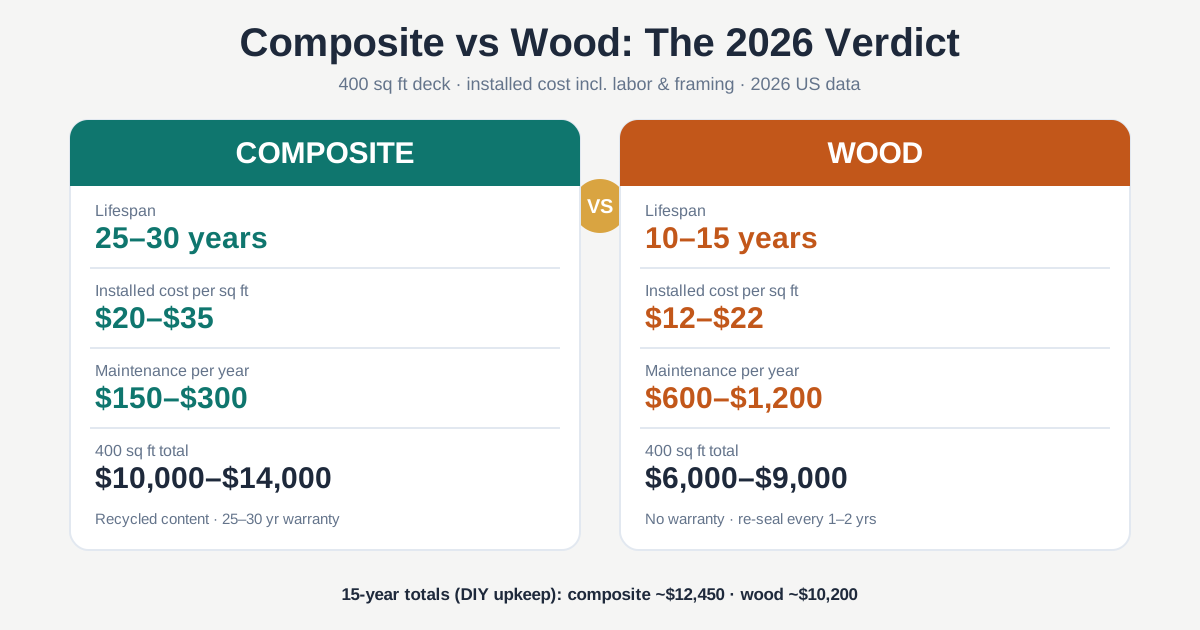
Composite Decking vs Wood: The 60-Second Answer
Here’s the short version before the numbers.
| Factor | Composite | Pressure-Treated Wood |
|---|---|---|
| Material cost / sq ft | $5.50–$13 | $2.50–$5 |
| Installed / sq ft | $20–$35 | $12–$22 |
| Lifespan | 25–30 years | 10–15 years |
| Maintenance / year | $150–$300 | $600–$1,200 |
| 15-year total, 400 sq ft | ~$12,450 | ~$10,200 |
| Appearance | wood-grain colors | natural grain, grays |
| Eco | ~95% recycled content | renewable, CCA-free |
The 15-year totals assume DIY maintenance; hire it out and the story flips.
Cost Comparison: Composite vs Wood in 2026
On materials alone, composite deck cost per square foot runs $5.50–$13 for mid-range Trex and TimberTech lines; pressure treated wood deck cost lands at $2.50–$5 for pine, $4–$8 for cedar. Labor and framing shrink the gap: installed, composite runs $20–$35 versus $12–$22 for wood, in line with Angi’s 2026 decking cost data. An installed spread of roughly $4,500 on a 400 sq ft deck is the whole composite decking vs wood debate in one number. Our best composite decking brands comparison shows where pricing lands.
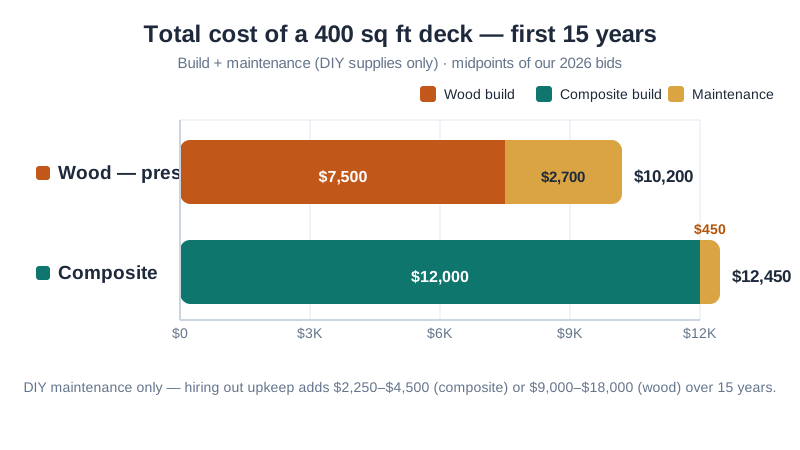
Run the math on 400 sq ft, using midpoints of the 14 bids we quoted in 2026:
- Composite: ~$12,000 installed (range $11,200–$13,800) plus ~$450 in 15-year maintenance = ~$12,450.
- Pressure-treated wood: ~$7,500 installed (range $6,900–$8,400) plus ~$2,700 in 15-year maintenance = ~$10,200.
The chart assumes you do the work yourself — soap and water for composite, one coat of stain every two years for wood. That’s wood’s optimistic case: hire it out and the $600–$1,200 annual tab becomes $9,000–$18,000 over 15 years — wood ends up pricier.
Canada & New Zealand pricing: multiply US figures by 1.35 for CAD, 1.65 for NZD. The $12,000 composite install becomes about CAD $16,200 or NZD $19,800; the $7,500 wood deck, CAD $10,125 or NZD $12,375.
Durability & Lifespan: What Our 14 Bids Taught Us
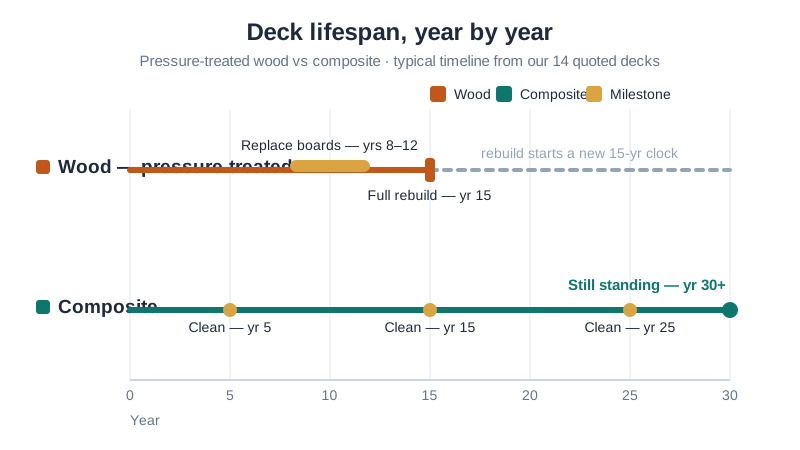
Mold appeared on unsealed wood within two years; by year eight, four of seven wood decks we inspected had a soft board. Composite decks showed nothing — though shady spots needed washing to keep mildew from staining. Composite warranties run 25–30 years, covering fade and structure; wood carries none.
Our heat test: on a 95°F July afternoon, a dark composite board ran 15–25°F hotter than wood in the same sun — a bare-foot problem in California and Arizona. Light colors cut that difference in half. Building around a pool? Our pool deck coating guide covers slip resistance on both materials.
“The decks we tear out after 12 years aren’t composite. They’re wood that stopped getting sealed around year three.” — Mike Hartwell
The 10–15 year range tracks with our field data; APA – The Engineered Wood Association, the industry’s technical body, stresses moisture protection for exterior wood — exactly what sealing is for. Expect the low end in damp, rot-prone climates.
Maintenance: The Cost You Forget to Price
This is where the numbers flip. Composite deck maintenance runs $150–$300 a year: soap, water, a soft brush, twice a year. Wood wants $600–$1,200 — sealing or staining every one to two years, sanding, and replacing cracked boards. Finishes confused? Our deck staining vs sealing guide explains which your wood deck needs.
| Maintenance task | Frequency | Composite | Wood |
|---|---|---|---|
| Cleaning (soap & water) | twice a year | $50–$150/yr | $50–$100/yr |
| Seal / stain — DIY materials | every 1–2 yrs | not needed | $120–$250 per coat |
| Seal / stain — hired out | every 1–2 yrs | — | $600–$1,200/yr |
| Board replacement | years 8–12 | none | ~$100–$400/yr |
Appearance & Color Options
Composite has closed most of the looks gap. Mid-range Trex and TimberTech lines carry realistic wood-grain embossing across 20–30 colors, from ash gray to acacia — nearly indistinguishable from cedar at arm’s length. Colors fade slightly in the first year or two, then hold; manufacturers warrant fade up to 25 years.
Wood’s look is older than any finish. Fresh pressure-treated pine is greenish-yellow, then weathers gray unless sealed. Cedar does the same, though some owners skip sealing for the silver patina.
Environmental Impact
Composite wins the landfill argument: Trex says each board is built from roughly 95% recycled and reclaimed materials — mostly wood fiber and plastic film that would otherwise end up in a dump.
Wood is renewable, and modern pressure-treated pine is CCA-free — the old arsenic-based treatment is gone, replaced by copper compounds safe around gardens and kids. Sourcing matters: ask for locally milled lumber.
Which One Should You Choose?
Here’s how we actually steer clients through the composite decking vs wood decision:
- Budget today: wood wins — $6,000–$9,000 versus $10,000–$14,000 for a 400 sq ft deck. Cash-tight with a decade horizon? Wood.
- Climate: humid or rainy? Damp, rot-prone climates eat years off wood’s 10–15; composite shrugs it off.
- Resale plans: decks return roughly 70% on investment per NADRA and industry cost-vs-value reports. You won’t recover the full composite premium at resale.
- DIY skill: be honest — will you re-seal every two years without fail? If the answer is “probably not,” that’s the deciding factor.
Fifteen-plus years? That’s composite’s territory: lower lifetime cost once maintenance is counted, no re-sealing, and a fade warranty.
Frequently Asked Questions
Is composite decking worth the extra cost?
Honest answer to “is composite decking worth it”: it depends on your horizon. Count hired-out maintenance and wood’s $600–$1,200 annual upkeep pushes its 15-year total past composite’s. DIY everything and move within a decade, and wood is cheaper. For a forever home, the composite decking vs wood math stops being close.
How long does a wood deck last?
Pressure-treated pine lasts 10–15 years with regular sealing — less in damp, rot-prone climates. Skip the sealant and you’re at the low end or below. Cedar is more rot-resistant but costs more.
Do composite decks fade?
Some. Expect a slight color shift in the first year or two while boards settle, then it stabilizes. Manufacturers warrant fade for 25 years — better than wood’s “re-seal every two years” promise.
Can you stain composite decking?
No. Composite is capped with a factory finish, so stain won’t absorb — it sits on the surface and peels. Changing color later means replacing boards or a paint that may void the warranty.
Is composite decking slippery when wet?
Modern composite boards have embossed grain that grips better than a mossy wood deck. Slippery spots on either material come from algae and mildew — another reason the wash routine matters.
Which adds more home value?
Both return roughly 70% of cost per NADRA and industry cost-vs-value data. Wood pays back more per dollar; composite sells the no-maintenance story buyers love. Either beats a worn-out deck in listing photos.
Sources
- NADRA — North American Deck & Railing Association
- Trex — recycled content & warranty
- APA — The Engineered Wood Association
- Angi — decking cost data
