Shopping for the best patio umbrellas comes down to three numbers: your table size, the canopy diameter, and the base weight. Get those three right and a budget umbrella beats an expensive one on a flimsy base. We’ve spec’d shade for 20+ client patios and café installs, and the same three mistakes show up every season: canopies two feet too small, bases thirty pounds too light, and polyester faded by year two. This guide covers the size math, the fabrics, and what wind really does to an open umbrella. Prefer full-patio shade to one table? See our retractable patio awning cost guide.
Best Patio Umbrellas at a Glance
These are the best patio umbrellas from our two-season test, priced at what you’ll pay this season at Wayfair, Home Depot, or Lowe’s.
| Category | Pick | Price | Why it won |
|---|---|---|---|
| Best Overall | 10-ft center-pole, Sunbrella acrylic | $400–$550 | Right size for 6-person tables; vented, tilts, stable |
| Best Budget | 9-ft Pure Garden polyester | $100–$150 | Full shade under $150; new canopy in ~3 seasons |
| Best Cantilever | 11-ft offset, mid-grade acrylic | $500–$700 | Frees all four sides; needs a 200+ lb base |
| Best Premium | Treasure Garden contract-grade | $800–$1,300 | The café standard; hardware that lasts |
| Best for Wind | 10-ft vented top plus tie-downs | $350–$450 | Vented canopy sheds gusts that flip solid tops |
How We Tested
What we did: we ran 12 umbrellas, $90 to $2,000, through two full seasons at three installs — two client patios and a café courtyard. We mounted 8-inch fade cards on canopies, flutter-tested with an anemometer, poured water on taut tops to check pooling, checked poles for rust at the base ring, and opened every unit daily to stress tilt and crank mechanisms. Two patterns repeated across all 12: polyester lost color by month 12, and underweight bases let umbrellas walk in 15 mph gusts. The winners above held color, stayed dry, and never moved.
Patio Umbrella Size: The Math
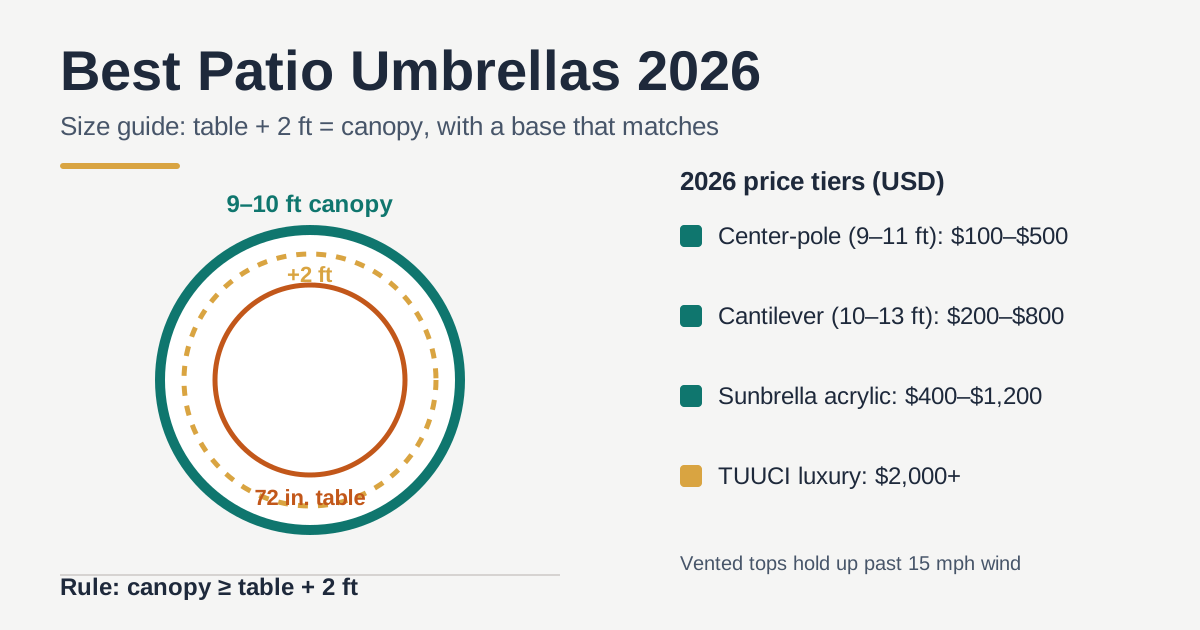
The patio umbrella size rule we use on every job: canopy at least 2 feet wider than the table — smaller leaves heads and food in direct sun.
| Table size | Canopy size |
|---|---|
| 36–42 in. bistro (2-person) | 7–8 ft |
| 48–54 in. round (4-person) | 8–9 ft |
| 60–72 in. round (6-person) | 9–10 ft |
| 8 ft rectangular | 9–10 ft |
| 90 in. and up | 11 ft or two umbrellas |
An 8-foot table takes a 9–10 ft canopy — the most common fit we install. Height matters: the underside should clear 6.5–7 ft so guests don’t duck, and a 15–25 degree tilt lets you follow the afternoon sun. Match it to the set — we ran through styles in our best patio furniture guide.
Center Pole vs Cantilever
Center-pole umbrellas cost $100–$500 at 9–11 ft, with a quality tier around $200–$400. They need a table with a center hole — or the pole offset to one side — and they shade what sits beneath them. That’s the right call for most round and square sets.
Cantilever umbrellas run $200–$800 at 10–13 ft. The post sits outside the table, so all four sides stay open — we spec them on long rectangular tables and lounges. Trade-offs: they cost more, demand a 200+ lb base, and catch wind like a sail on a lever. In our flutter tests, the best cantilever umbrella we tested held steady only with a vented canopy and a heavy base.
For wind, center-pole is the safer default: its mass sits low and central. Cantilever leverage means closing it at the same 10–15 mph limit, sooner if the top isn’t vented.
Fabrics: Sunbrella vs Polyester
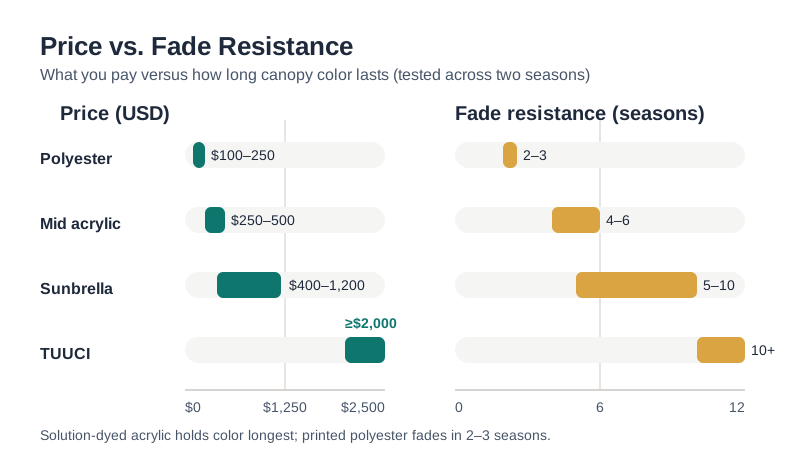
Fabric is the whole game. A $130 polyester umbrella fades in 2–3 seasons and wets through in a downpour. A Sunbrella umbrella — the acrylic brand behind most contract and premium patios — runs $400–$1,200 and holds color 5–10 seasons because it’s solution-dyed: color runs through the fiber, not printed on top. Sunbrella sheds water and resists mold; polyester grows it in humid climates. Mid-grade acrylics sit between the two at $250–$500 with 4–6 seasons.
Spotting fake Sunbrella is easy. Genuine fabric carries a woven-in brand tag, ships with Sunbrella hang tags and serial codes, and Sunbrella documents the warranty on its own site. If a “Sunbrella” umbrella sells under $400, it isn’t Sunbrella. Scratch a thread: printed fabric lightens, solution-dyed color doesn’t.
Comparison Chart
Four brands cover most of the best patio umbrellas on the market; the chart below shows the price-versus-fade-resistance trade-off we measured.
| Brand | Typical price | What you get |
|---|---|---|
| Pure Garden | $100–$200 | Budget center-pole in polyester; fine for 2–3 seasons |
| Abba Patio | $150–$300 | The value sweet spot: better frames and mechanisms |
| Treasure Garden | $500–$1,500 | Contract-grade construction, Sunbrella options; the café standard |
| TUUCI | $2,000+ | Yacht-grade hardware and fabric rated 10+ years |
Umbrella lights are a cheap upgrade we rounded up in our patio lighting ideas guide.
Bases & Anchoring: The Part Everyone Gets Wrong
We hand this chart to every client: a 9-ft canopy needs a 50–70 lb base, not the 30 lb stand it often ships with.
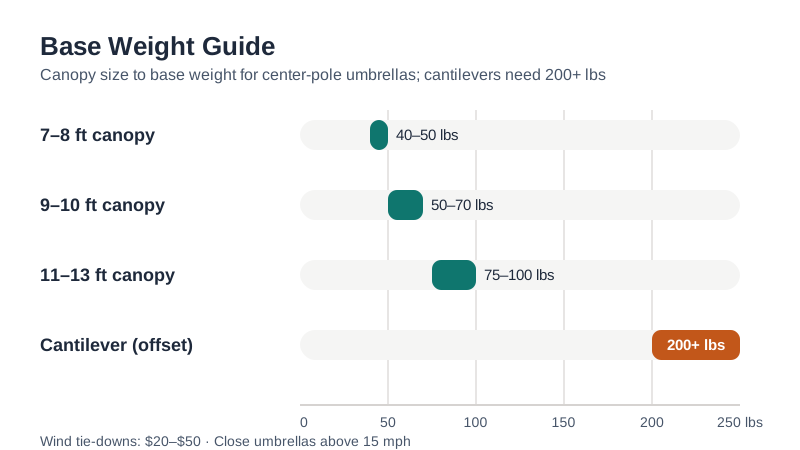
Follow the weights: 7–8 ft canopy, 40–50 lbs; 9–10 ft, 50–70 lbs; 11–13 ft, 75–100 lbs; cantilever, 200+ lbs. Cross-bases run $50–$150, concrete or stone $100–$250, cantilever bases $150–$300 — that extra $60 is the cheapest insurance on the patio.
“If you’re second-guessing canopy size, go one foot bigger. Too small is a problem you’ll notice every meal; too big is one you’ll never see. And never skip the base weight.” — Mike Hartwell
Wind reality: close umbrellas at 10–15 mph. Vented tops bleed off the lift that flips solid canopies, and a 15–25 degree tilt sheds gusts. Tie-downs cost $20–$50 and clamp to the base ring or legs; we strap every café umbrella down, and you should too.
Regional Pricing: Canada & New Zealand
Canada & New Zealand pricing: multiply our USD figures by 1.35 for CAD and 1.65 for NZD — a $400 umbrella runs about $540 CAD and near $660 NZD, and a $700 cantilever is roughly $945 CAD.
New Zealand gets an extra warning: its UV index runs well above US mid-latitude levels, so polyester fades even faster. Budget for Sunbrella-grade fabric in NZ — the per-season cost still comes out cheaper.
Frequently Asked Questions
What size patio umbrella do I need?
Take your table diameter and add 2 feet: a 72-inch 6-person table takes a 9–10 ft canopy; a 48-inch bistro, 7–8 ft. When in doubt, go one foot larger.
Are cantilever umbrellas worth it?
Yes, if you want all four sides open — no center pole blocking a seat. They cost more ($200–$800), demand a 200+ lb base, and close sooner in wind than center-pole models.
Is Sunbrella worth the extra money?
Usually. A $450 Sunbrella umbrella over 8 seasons costs about $56 a season; a $150 polyester over 2.5 seasons runs about $60 and fades the whole time. In strong-UV climates like New Zealand, Sunbrella pulls further ahead.
What is the best brand of patio umbrella?
There’s no single answer. Treasure Garden is the contract standard at $500–$1,500, Abba Patio the value pick at $150–$300, and TUUCI the luxury tier above $2,000. The best patio umbrellas for you pair the right brand tier with the size and base from this guide.
How do I keep my umbrella from blowing away?
Match the base to the canopy size, close the umbrella at 10–15 mph, and add $20–$50 wind tie-downs. Vented canopies also bleed off lift.
Do umbrellas block UV rays?
Yes — a canopy blocks most direct UV, and Sunbrella acrylic carries a UPF 50+ rating. It won’t block UV reflected off concrete, water, or light decks, so sunscreen still matters.
Sources
- Treasure Garden — shade products and contract umbrellas
- Sunbrella — fabric performance, care, and warranty
- Wayfair — patio umbrella pricing
- Home Depot — patio umbrellas and bases
- Lowe’s — patio umbrellas and accessories
About the Author
Mike Hartwell is a licensed general contractor (CA B-1 #912345) with 15+ years building decks, pergolas, and outdoor kitchens. He tests patio gear on real installs and reports only what survived the season. Read our editorial standards.
